A Complete Buyer’s Guide for Construction and Manufacturing Professionals
Introduction
When selecting coated steel for roofing, construction, or industrial manufacturing, two materials frequently dominate the conversation: galvanized steel coil and Galvalume steel. While both are carbon steel substrates protected by metallic coatings designed to resist corrosion, their performance characteristics, longevity, and application suitability differ significantly.
At Zhongtang Metal, we manufacture both products and regularly guide international buyers in selecting the optimal material for their specific project requirements. Understanding the technical distinctions between these two coated steel products is essential—not just for performance, but for long-term cost efficiency and project success.
This comprehensive comparison covers coating composition, corrosion mechanisms, edge protection, heat resistance, cost factors, and ideal applications to help you make an informed procurement decision.
Explore our manufacturing capabilities at https://zhongtangmetal.com/.
Coating Composition: The Fundamental Difference
Galvanized Steel Coil (GI)
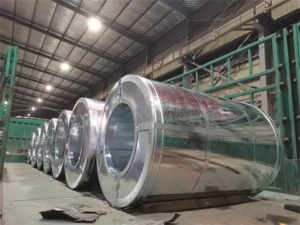
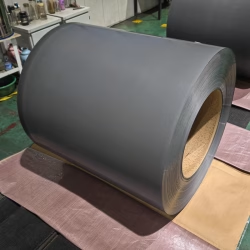
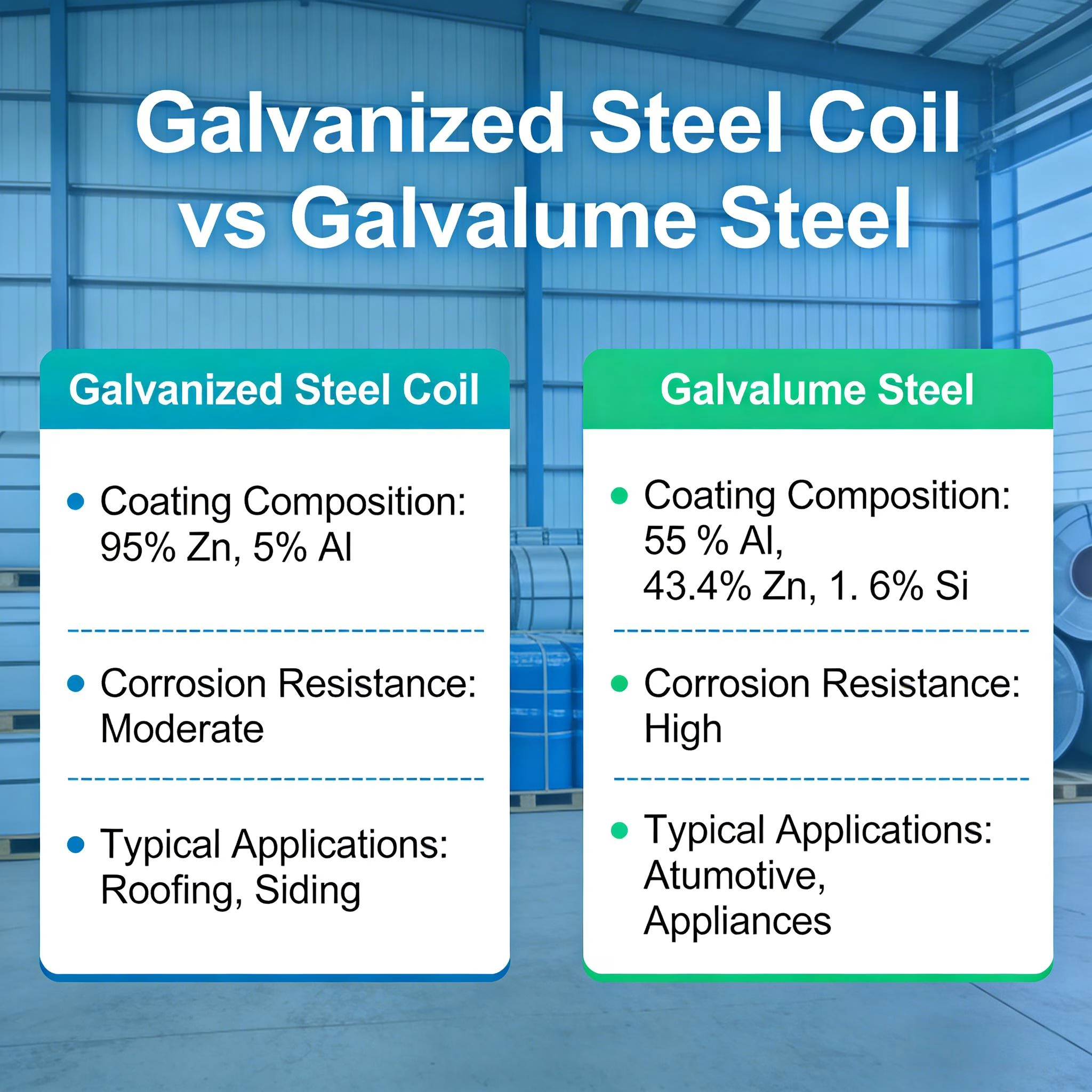
Galvanized steel coil is produced by immersing carbon steel in a bath of molten pure zinc (Zn) , creating a metallurgical bond between the steel substrate and the zinc coating through a hot-dip galvanizing process.
-
Coating Composition: 99%+ pure zinc
-
Typical Coating Weight: Z40 to Z275 (40–275 g/m², measured as total both sides)
-
Coating Structure: Multiple zinc-iron alloy layers with a pure zinc outer layer
-
Surface Appearance: Characteristic spangle pattern (regular, minimized, or zero spangle available)
The simplicity of pure zinc coating has made galvanized steel a global standard for decades, valued for its predictable performance and reliable sacrificial protection.
Galvalume Steel (GL)
Galvalume steel—technically known as aluminum-zinc alloy-coated steel—was developed to combine the barrier protection of aluminum with the sacrificial properties of zinc.
-
Coating Composition: 55% Aluminum + 43.4% Zinc + 1.6% Silicon
-
Typical Coating Weight: AZ50 to AZ185 (aluminum-zinc alloy coating designations)
-
Coating Structure: Complex alloy with aluminum-rich dendrites and zinc-rich interdendritic regions
-
Surface Appearance: Characteristic silver-gray spangle with a more matte finish than galvanized
The silicon addition promotes proper adhesion and controls the alloy layer formation during the coating process.
View our Galvanized Steel Coil product page for complete specifications.
Corrosion Resistance: Performance in Different Environments
Galvanized Steel Coil
Galvanized steel performs reliably in moderate atmospheric conditions. The zinc coating protects the underlying steel through:
-
Sacrificial Protection: Zinc corrodes preferentially, protecting exposed steel at cut edges and scratches
-
Barrier Protection: The dense zinc layer physically isolates steel from oxygen and moisture
-
Self-Healing Properties: Zinc corrosion products can seal minor scratches over time
Typical lifespan in rural atmospheres: 30–50 years (depending on coating weight)
Galvalume Steel
Galvalume offers superior corrosion resistance in most environments, particularly those with higher corrosivity:
-
Barrier Protection Dominance: The aluminum component forms a stable, adherent oxide layer that significantly slows corrosion progression
-
Zinc Sacrificial Action: The zinc component provides limited edge and scratch protection
-
Plateau Effect: Corrosion slows dramatically after initial exposure as aluminum-rich surface stabilizes
Typical lifespan in identical conditions: Galvalume typically lasts 2–4 times longer than galvanized steel in outdoor exposure tests. In marine and industrial atmospheres, this performance gap widens further.
Edge Protection and Cut-Edge Corrosion
Galvanized Steel: Superior Edge Protection
One of galvanized steel’s most significant advantages is its behavior at cut edges:
-
Strong Sacrificial Action: Zinc’s electrochemical potential ensures it corrodes preferentially, protecting exposed steel edges
-
Creep Protection: Zinc corrosion products can migrate slightly across cut surfaces
-
Field Performance: Even with unprotected cut edges, galvanized steel maintains structural integrity longer than expected
Galvalume: Edge Protection Considerations
Galvalume’s edge protection characteristics differ fundamentally:
-
Reduced Sacrificial Capacity: The lower zinc content means less galvanic protection at cut edges
-
Faster Edge Rust: Without proper edge sealing, Galvalume may show red rust at exposed cuts sooner than galvanized steel
-
Mitigation Required: For optimal performance, Galvalume installations should include edge sealing or ensure cut edges are not exposed to standing water
Best Practice: For Galvalume roofing, always seal cut edges or specify factory-cut edges with proper overlap design.
Heat Resistance and Reflectivity
Galvalume: Superior Thermal Performance
The aluminum content in Galvalume provides significant advantages in high-temperature applications:
-
Heat Reflectivity: Reflects up to 75% of solar radiation (compared to approximately 40% for galvanized steel)
-
Cooler Buildings: Reduces cooling loads in warm climates
-
Oxidation Resistance: Maintains appearance and integrity at higher temperatures
-
Thermal Stability: Less susceptible to coating degradation under concentrated heat
Galvanized Steel: Moderate Heat Performance
-
Lower Reflectivity: Absorbs more solar heat
-
Temperature Limitations: Extended exposure above 200°C can accelerate zinc oxidation
-
Suitable Applications: Performs well in standard ambient conditions but less ideal for intense solar exposure
For roofing in tropical, desert, or high-solar-exposure regions, Galvalume’s heat reflectivity provides measurable energy savings and improved interior comfort.
Cost Comparison: Initial Investment vs. Lifecycle Value
Galvanized Steel Coil
-
Initial Cost: Generally more affordable (approximately 10–20% lower than Galvalume for equivalent thickness)
-
Coating Weight Options: Wide range from light (Z40) to heavy (Z275) allowing cost optimization
-
Maintenance: May require painting or recoating in aggressive environments after 10–15 years
-
Lifecycle Cost: Excellent value in moderate environments with proper specification
Galvalume Steel
-
Initial Cost: Carries a slight premium due to aluminum alloy coating composition
-
Extended Lifespan: Lower annualized cost in aggressive environments despite higher upfront investment
-
Maintenance: Typically requires less maintenance over service life
-
Lifecycle Value: Superior return on investment in marine, industrial, and high-corrosion applications
Consideration: When evaluating cost, consider the full project lifecycle rather than initial material price alone. In many applications, Galvalume’s extended service life offsets its higher initial cost within 5–10 years.
Application Comparison: Selecting the Right Material
| Application | Galvanized Steel Coil | Galvalume Steel | Recommendation Factors |
|---|---|---|---|
| Roofing | Good | Excellent | Galvalume’s heat reflectivity and corrosion resistance make it the preferred choice for most roofing applications |
| Structural Components | Excellent | Good | Galvanized steel’s edge protection benefits structural members with many cut ends and connections |
| Marine/Coastal Areas | Moderate | Strong | Galvalume’s aluminum barrier protection excels in salt-laden atmospheres |
| Industrial Environments | Good | Excellent | Superior resistance to chemical exposure and industrial pollutants |
| Automotive Components | Common | Rare | Galvanized steel’s formability and weldability suit automotive applications |
| Agricultural Buildings | Excellent | Good | Cost-effective galvanized steel performs well in rural, non-corrosive environments |
| High-Temperature Exposures | Limited | Excellent | Galvalume maintains integrity where galvanized may degrade |
| Cut-Edge Intensive Applications | Excellent | Requires Sealing | Projects with many field cuts favor galvanized steel’s sacrificial protection |
| Aesthetic/Visible Applications | Good | Excellent | Galvalume’s uniform aging pattern maintains appearance longer |
| Budget-Sensitive Projects | Excellent | Good | When upfront cost is the primary constraint |
Formability and Fabrication Considerations
Galvanized Steel Coil
-
Excellent Formability: Pure zinc coating accommodates bending, roll-forming, and moderate drawing
-
Weldability: Good weldability with appropriate techniques
-
Coating Integrity: Maintains coating adhesion through most forming operations
-
Temperature Sensitivity: Avoid welding temperatures exceeding 300°C in coating-adjacent areas
Galvalume Steel
-
Good Formability: Slightly less ductile than pure zinc coating but still suitable for most roofing profiles
-
Weldability: Requires adjusted parameters; aluminum content affects weld characteristics
-
Coating Considerations: More prone to micro-cracking at severe bends (avoid bending radii less than material thickness)
-
Temperature Management: Critical to maintain proper welding parameters to preserve coating integrity
Environmental and Sustainability Factors
Galvanized Steel
-
Recyclability: 100% recyclable; zinc coating recovered during steel recycling
-
Energy in Production: Established production processes with improving efficiency
-
Service Life Extension: Galvanizing extends carbon steel service life 3–5 times versus uncoated steel
Galvalume
-
Recyclability: Fully recyclable with aluminum and zinc recovered
-
Production Energy: Higher initial embodied energy due to aluminum content
-
Service Life Extension: Significantly extends service life, reducing replacement frequency and associated environmental impacts
-
Energy Savings: Operational energy savings through heat reflectivity in buildings
Both materials contribute to sustainability by extending the useful life of carbon steel, reducing the need for replacement and conserving resources.
How to Specify: Decision Framework
Choose Galvanized Steel Coil When:
✅ Budget constraints prioritize lower initial investment
✅ Project involves extensive field cutting and exposed edges
✅ Application requires maximum formability or deep drawing
✅ Environment is rural or moderately corrosive
✅ Structural components with many connections and cut ends
✅ Traditional performance expectations with proven history
Choose Galvalume Steel When:
✅ Long-term corrosion resistance is the primary requirement
✅ Location is marine, coastal, or industrial
✅ Roofing application benefits from heat reflectivity
✅ High-temperature exposure is expected
✅ Appearance and uniform aging matter for visible installations
✅ Lifecycle cost analysis favors extended service life
✅ Maintenance access is limited or expensive
Quality Assurance at Zhongtang Metal
Whichever material you select, Zhongtang Metal ensures manufacturer-level quality control:
-
Certified Substrates: Verified carbon steel base materials
-
Precision Coating Control: Automated systems maintaining uniform coating weights
-
Comprehensive Testing: Adherence, thickness, and corrosion resistance verification
-
Export-Ready Packaging: Protection for international shipping
-
Full Documentation: Mill certificates and test reports provided
Visit our Galvanized Steel Coil product page for detailed specifications.
Frequently Asked Questions
Q: Can Galvalume be used interchangeably with galvanized steel?
A: Not always. While both are coated steel products, their performance characteristics differ. Galvalume excels in corrosion resistance and heat reflectivity but requires attention to edge protection. Galvanized steel provides better sacrificial edge protection at lower cost.
Q: Does Galvalume rust?
A: Yes, but significantly slower than galvanized steel in most environments. The aluminum oxide layer provides excellent barrier protection, but cut edges may show rust without proper sealing.
Q: Which is better for roofing in coastal areas?
A: Galvalume typically outperforms galvanized steel in marine environments due to aluminum’s superior resistance to salt-laden atmospheres. However, proper edge sealing remains important.
Q: Can I paint over Galvalume?
A: Yes, with proper surface preparation and compatible primers. This is common when matching colors or adding additional protection.
Q: What coating weight should I specify?
A: For galvanized steel, higher coating weights (Z275) provide longer life in aggressive environments. For Galvalume, standard AZ150 (150 g/m²) suits most applications, with heavier coatings available for extreme conditions.
Conclusion: Making the Right Choice
The choice between galvanized steel coil and Galvalume steel ultimately depends on your specific application, environment, and priorities:
-
If cost efficiency and edge protection are your primary concerns, galvanized steel coil offers reliable performance at an attractive price point.
-
If long-term corrosion resistance and heat reflectivity are critical to your project success, Galvalume justifies its premium through extended service life and operational benefits.
At Zhongtang Metal, we manufacture both products to international standards and welcome the opportunity to discuss your specific requirements. Our technical team can provide guidance based on your project location, application, and performance expectations.
Connect with Zhongtang Metal
Need assistance selecting the right material for your project? Our team of metallurgical specialists is ready to help.
Zhongtang Metal Manufacturing Co., Ltd.
Official Manufacturer • Direct Export • Quality Assured
🌐 Website: https://zhongtangmetal.com/
📧 Technical Inquiries: Via official website contact form
📄 Product Specifications: Galvanized Steel Coil
📋 Request a Quote: Contact Us
Explore Related Products:
Internal Links Summary
-
Galvanized Steel Coil: https://zhongtangmetal.com/product/galvanized-steel-coil/
-
PPGI Steel: https://zhongtangmetal.com/product/color-coated-steel-coil/
-
Contact Us for Quote: https://zhongtangmetal.com/contact/