Quick Answer: What’s the Price of Carbon Steel Coil in 2026?
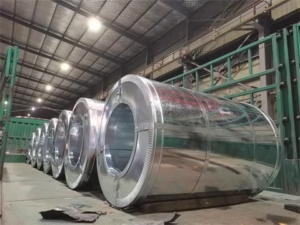
As of July 2026, carbon steel coil prices from Chinese mills range from approximately 480to760 per metric ton FOB China, depending on grade, thickness, and surface treatment. Hot-rolled coil (HRC) in standard Q235B grade trades around 486–508/ton FOB, while cold-rolled coil (CRC) commands a premium of 80–150/ton above HRC due to additional processing.
However — the FOB price is only part of what you’ll actually pay. By the time your coils arrive at your warehouse, the total landed cost is typically 1.3× to 2× the FOB price, depending on your location and order size.
This guide breaks down exactly what goes into that number, so you can budget accurately and negotiate from a position of knowledge.
1. Current Market Snapshot (July 2026)
Source note: Prices above are indicative midpoints compiled from public market data (LME, SteelOrbis, S&P Global Commodity Insights) and international trade platforms. Actual mill quotations may differ by 10–30/ton based on order volume, payment terms, and mill availability. Always request a current formal quotation — prices can shift within a single trading week. All prices in USD/ton FOB major Chinese ports (Tianjin, Qingdao, Shanghai).
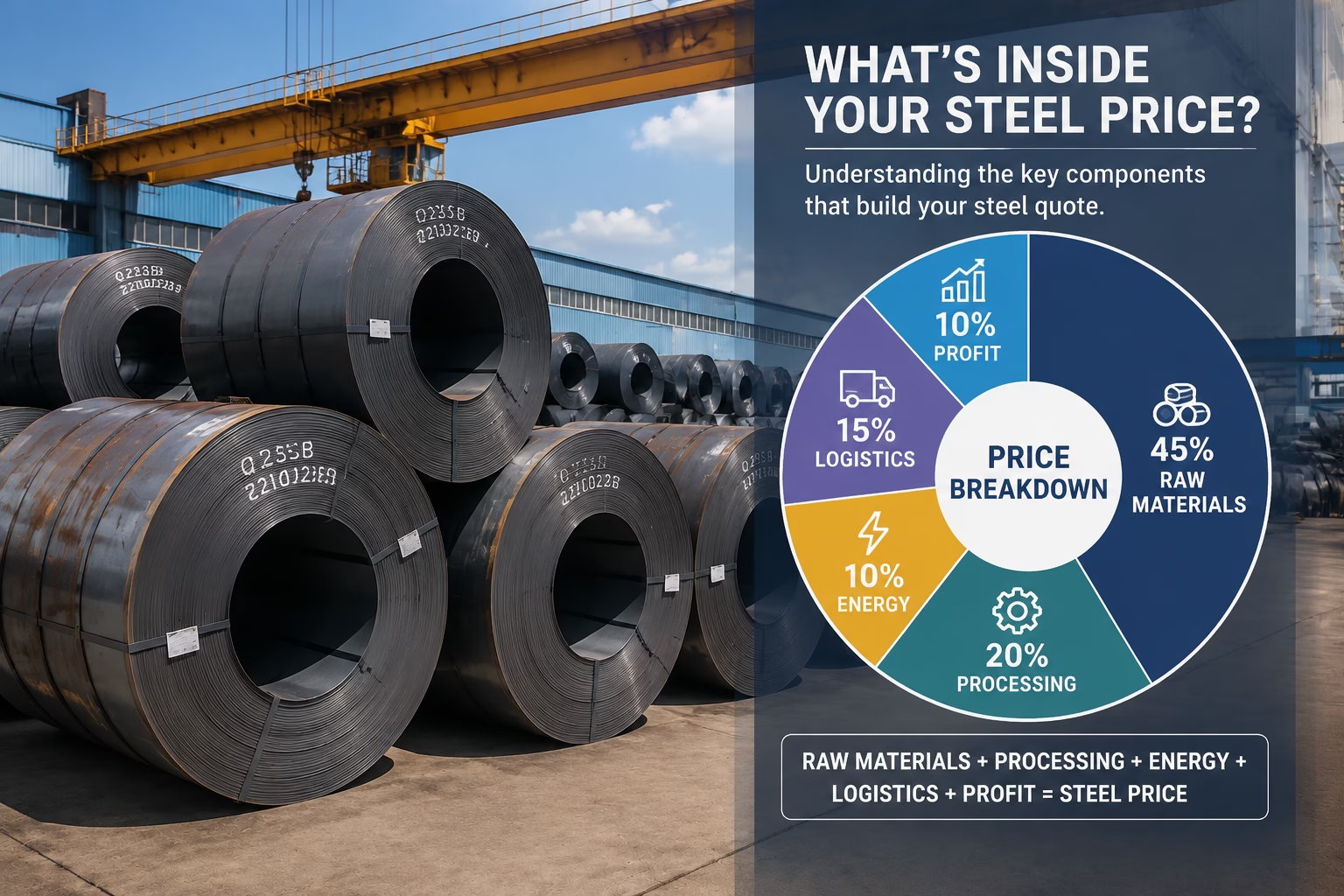
2. What Actually Makes Up the Price? A Should-Cost Breakdown
If you’re importing steel, knowing only the FOB price is like buying a car and only looking at the sticker. You need to understand what’s inside the number to know if you’re getting a fair deal.
Here’s how a typical Q235B hot-rolled coil at $495/ton FOB breaks down:
┌─────────────────────────────────────────────────────────┐
│           CARBON STEEL COIL SHOULD-COST MODEL           │
│              (Q235B HRC 3.0mm, FOB Tianjin)              │
├──────────────────────────────────┬──────────┬───────────┤
│ Cost Component                   │ USD/ton  │ % of FOB  │
├──────────────────────────────────┼──────────┼───────────┤
│ Iron ore (~1.6 tons @ $105/ton)  │  $168    │   34%     │
│ Coking coal (~0.7 tons @ $210/t) │  $147    │   30%     │
│ Scrap & alloys                   │   $25    │    5%     │
│ Energy (electricity, gas)        │   $50    │   10%     │
│ Labor & overhead                 │   $25    │    5%     │
│ Depreciation & maintenance       │   $20    │    4%     │
│ Mill margin                      │   $60    │   12%     │
├──────────────────────────────────┼──────────┼───────────┤
│ FOB Tianjin TOTAL                │  $495    │  100%     │
└──────────────────────────────────┴──────────┴───────────┘
Key insight: Raw materials (iron ore + coal) account for roughly 64% of FOB cost. This means when iron ore moves 10/ton,yourcoilpricemovesroughly16/ton — all else being equal.
Why mill margin matters for negotiation: A mill running at 85% capacity may accept a margin as low as 30–40/ton to keep lines moving. The same mill at 95% capacity will hold firm at $60+. Ask your supplier about current mill utilization rates — it directly affects your negotiating leverage.
3. Beyond FOB: What You’ll Actually Pay
FOB is only the starting line. Here’s how a 100-ton order of Q235B HRC from Tianjin to Dubai adds up:
That’s a 28.3% premium over FOB — and we haven’t even included potential costs like:
- Bank charges: L/C opening fees typically 0.1–0.3% of transaction value
- Currency hedging: If you’re paying in USD and your local currency moves 3% against the dollar, that’s another $15/ton
- Inspection fees: Third-party inspection (SGS/TÜV/BV) costs 500–1,500 per batch flat fee
- Demurrage: If you don’t clear containers fast enough, detention charges run 30–80 per container per day
Realistic budgeting rule of thumb for Middle East buyers: Take FOB China price × 1.30 to 1.35 for landed cost to Gulf ports. For West Africa, use 1.40 to 1.55. For South America, use 1.45 to 1.65. Always get a line-item freight quotation for your specific route — port congestion surcharges can add 15–30% to base ocean freight overnight.
4. What Moves the Price? 6 Factors to Watch
4.1 Raw Material Costs (60–70% Impact)
Iron ore and coking coal are the two largest cost drivers. In July 2026, iron ore sits at approximately 105/ton—upfromalowof92 in late 2025. Every 10swinginironoretranslatestoroughly16/ton on your coil price.
What to watch: China’s steel mill blast furnace utilization rate (reported weekly by Mysteel). Above 88% = strong demand, firm prices. Below 82% = mills under pressure, room to negotiate.
4.2 Production Policy & Capacity Controls
China maintains a crude steel output cap policy — mills cannot exceed their annual production allocation. When a major steel province (Hebei, Jiangsu) announces production cuts, supply tightens and prices rise within 2–4 weeks.
July 2026 context: China’s H1 2026 crude steel output has been near flat year-on-year, suggesting no imminent forced production cuts — but this can change with a single government notice. Monitor the National Development and Reform Commission (NDRC) announcements for production restriction policies.
4.3 Thickness & Width Specifications
Thinner and wider demands more sophisticated rolling:
4.4 Surface Treatment
- Black (hot-rolled, unprocessed): Base price — no surcharge
- Pickled & Oiled (HRPO): +25–40/ton
- Cold-rolled (full hard): +80–120/ton (cold reduction process)
- Cold-rolled annealed (SPCC/DC01): +100–150/ton (includes annealing furnace cost)
4.5 Order Volume
Steel is a volume business. Here’s how pricing typically scales:
If you’re a first-time buyer, start with a 25–50 ton trial order. Yes, you pay a small premium — but you verify quality, delivery reliability, and communication before committing to volume. The cost of a failed 500-ton order far exceeds the $20/ton premium on a 25-ton trial.
4.6 Seasonal Demand Patterns
Chinese steel prices typically show seasonal patterns:
- Mar–May: Peak construction season in China → domestic demand pulls prices up
- Jun–Aug: Summer slowdown + rainy season → prices often soften → good buying window for exporters
- Sep–Oct: “Golden September, Silver October” — second demand peak
- Nov–Feb: Winter heating season → production curbs in northern China → mixed impact (less supply but also less demand)
What this means for you: July–August is historically a favorable window for international buyers, as Chinese domestic demand softens and mills are more willing to negotiate on export orders.
5. FOB vs CIF vs Door-to-Door: Which Terms Should You Use?
Recommendation for first-time buyers: Start with CIF terms. It’s the most common arrangement, gives you insurance coverage during transit, and lets you focus on the import clearance process at your end without worrying about freight arrangements.
For experienced importers with established freight relationships: FOB gives you more control over shipping costs and schedule. A capable freight forwarder can often beat the supplier’s CFR quote by 8–15% on well-established routes.
6. How to Get an Accurate Quote (And What to Send Your Supplier)
The single biggest reason quotes come back imprecise is incomplete specifications. To get a usable quotation within 24 hours, send your supplier all of the following:
- Grade: e.g., Q235B, ASTM A36, S235JR (include the standard — don’t just say “mild steel”)
- Thickness: e.g., 3.0mm (±tolerance requirement if critical)
- Width: e.g., 1250mm (or slit to 600mm × 3 strips)
- Coil weight: e.g., 3–5 tons per coil (standard) or 8–10 tons (heavy coil)
- Surface: Black / Pickled & Oiled / Cold-rolled — be explicit
- Quantity: Total tonnage + acceptable tolerance (e.g., 100MT ±10%)
- Destination port: For shipping cost calculation
- Incoterms preference: FOB / CFR / CIF
- Packaging requirement: Standard export seaworthy packing, or special (e.g., waterproof wrapping for long transit)
- Certification needs: Mill Test Certificate (standard, always provided), or additional third-party inspection (SGS, TÜV, BV)
Example of a complete inquiry:
“Please quote Q235B hot-rolled carbon steel coil, 3.0mm × 1250mm × coil, black surface, 5-ton coil weight, 100MT ±10%, CIF Jebel Ali, UAE. Standard export packing. MTC required. Target shipment: August 2026.”
7. Red Flags in Steel Pricing: When a Quote Is Too Good to Be True
If you receive a quotation significantly below the market range described above, pause and investigate:
One simple check: Ask for the mill name and the heat number of the current production batch. A legitimate supplier can provide this within hours. If they can’t or won’t — that’s your answer.
8. Ready to Get a Quote?
Every order is different, and steel prices change weekly. The numbers in this guide give you a solid reference range — but your specific specification, quantity, and destination will determine your actual price.
Here’s what to do next:
- Prepare your specification using the checklist in Section 6 above
- Send us your inquiry via our contact page — our team provides detailed quotations within 24 hours, including:
- Line-item FOB/CIF cost breakdown
- Current mill lead time
- Shipping schedule to your port
- Available third-party inspection options
- Compare our quotation against the benchmark ranges in this guide
With 21 years of steel export experience across 150+ countries, we supply carbon steel coils manufactured to ASTM, EN, GB, and JIS standards from certified Chinese mills — with full Mill Test Certificates and optional SGS/TÜV/BV pre-shipment inspection.
→ Request Your Carbon Steel Coil Quotation Now
Frequently Asked Questions
Q: What’s the minimum order quantity for carbon steel coil?
Most Chinese mills require a minimum of 25 tons (one 20-foot container) for standard sizes. For trial orders, some suppliers — including us — can accommodate 10–15 tons by combining with other orders, though you’ll pay a small lot premium. See our guide on MOQ and trial orders in steel trading for detailed strategies.
Q: How long does delivery take?
Standard production lead time is 15–25 days from order confirmation. Ocean freight from major Chinese ports to Gulf ports typically takes 18–22 days; to West Africa 30–35 days; to Southeast Asia 7–10 days. Total timeline from order to delivery: approximately 5–8 weeks depending on destination.
Q: Can I get a sample before placing a bulk order?
Yes. We can provide A4-sized sample plates (approx. 200mm × 300mm) from current production batches. Samples are free; you cover the courier cost. This lets you verify surface quality, thickness, and material appearance before committing.
Q: What payment terms do you accept?
We accept T/T (30% advance, 70% against shipping documents), L/C at sight, and PayPal for small orders. For first-time buyers, we strongly recommend L/C at sight — it protects both parties through the banking system. Learn more in our steel payment terms comparison guide.
Q: How do I know the material will match the specification?
Every shipment includes a Mill Test Certificate (MTC) showing chemical composition and mechanical properties for each heat number. We also support third-party inspection by SGS, TÜV, or BV at our facility before shipment — you receive a certified inspection report before you release payment.
Related Articles
- Importing Galvanized Steel from China: Complete Cost, Risk & Process Guide
- 5 Hidden Costs When Buying Steel from China
- Carbon Steel vs Stainless Steel vs Galvanized: Total Cost of Ownership Comparison
- Steel Grade Equivalent Chart: GB vs ASTM vs EN vs JIS
- Zhongtang Quality Control: From MTC to Pre-Shipment Inspection