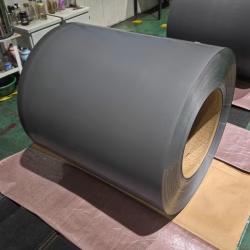

Hot Rolled Steel PlateIntroduction
Hot-rolled steel plates serve as fundamental materials across countless industrial sectors, from construction and automotive manufacturing to heavy machinery and infrastructure development. Understanding the various international standards governing their production is crucial for engineers, procurement specialists, and fabricators working on global projects. This comprehensive guide explores the major standardization systems for hot-rolled steel plates across key industrial regions, providing essential knowledge for material selection and specification.
Chinese Standards (GB/T)
China’s standardization system for hot-rolled steel plates primarily operates under the GB/T (Guobiao/Tuijian) framework, which translates to “National Recommended Standards.” These standards ensure consistent quality and performance characteristics for domestic production and international trade.
GB/T 3274-2017 represents the cornerstone standard for hot-rolled steel plates in China, covering carbon structural steels and high-strength low-alloy structural steels in plate and strip form. This comprehensive specification addresses dimensional tolerances, mechanical properties, and technical delivery conditions for general structural applications.
GB/T 1591-2018 specifically governs high-strength low-alloy structural steels, establishing multiple grades with varying minimum yield strengths to meet different structural requirements. This standard has gained significant international recognition alongside China’s growing export market.
GB/T 3273-2015 focuses on hot-rolled plates and strips intended specifically for cold forming operations, addressing the unique requirements of materials that will undergo subsequent manufacturing processes.
Additional specialized standards include specifications for pressure vessels, boilers, and other application-specific requirements, ensuring appropriate material selection for specialized industrial needs.
American Standards (ASTM)
The American Society for Testing and Materials (ASTM) standards represent one of the most widely recognized standardization systems globally, particularly in North America and international projects with American specifications.
ASTM A36 serves as the fundamental standard for carbon structural steel plates in the United States, specifying minimum mechanical properties and chemical composition requirements for general structural applications. Its widespread acceptance stems from its balanced combination of strength, weldability, and formability at competitive costs.
ASTM A572 covers high-strength, low-alloy (HSLA) steel plates with enhanced mechanical properties through Columbium-Vanadium alloying. This standard includes multiple grade levels (42, 50, 55, 60, 65) with corresponding minimum yield strengths, offering designers increased strength-to-weight ratios for structural applications.
ASTM A514/A517 specifies requirements for high-yield-strength, quenched and tempered alloy steel plates, primarily used in demanding applications such as mining equipment, construction machinery, and structural components where exceptional strength is paramount.
ASTM A516 governs carbon steel plates for pressure vessels for moderate and lower-temperature service, with different grades offering varying tensile strengths to match specific design requirements for containment applications.
The American Society of Mechanical Engineers (ASME) also publishes standards, which often mirror ASTM specifications but include additional requirements for boilers, pressure vessels, and other specialized equipment governed by ASME codes.
European Standards (EN)
The European Committee for Standardization (CEN) develops EN (European Norm) standards, which have been adopted by the United Kingdom and other European member states to create a unified standardization system across the region.
EN 10025-2 establishes technical delivery conditions for hot-rolled products of structural steels, covering non-alloy structural steel grades including S235, S275, and S355 with their respective minimum yield strengths. This represents the fundamental standard for general structural applications throughout Europe.
EN 10025-3 through EN 10025-6 provide specifications for normalized/normalized rolled weldable fine grain structural steels, thermomechanical rolled weldable fine grain structural steels, and high-yield-strength structural steels in quenched and tempered condition, respectively, offering designers increasingly specialized material options.
EN 10028-2 specifies flat products made of steels for pressure purposes, particularly defining requirements for non-alloy and alloy steels with specified elevated temperature properties for pressure vessel applications.
EN 10029 establishes tolerances for dimensions, shape, and mass for hot-rolled steel plates 3 mm thick and above, ensuring consistency in dimensional characteristics across European production.
Additional relevant standards include EN 10111 for hot-rolled low-carbon steel sheet and strip, EN 10149-2 for hot-rolled flat products made of high-yield-strength steels for cold forming, and EN 10163 covering delivery requirements for surface condition.
Japanese Standards (JIS)
The Japanese Industrial Standards (JIS) system represents one of Asia’s most influential standardization frameworks, with Japanese steel products recognized globally for their consistent quality and technical excellence.
JIS G 3101 governs general structural hot-rolled steel plates, shapes, and sections, establishing the fundamental requirements for materials used in building construction, bridge work, and other structural applications throughout Japan.
JIS G 3113 specifies hot-rolled steel plates, sheets, and strips for automobile structural uses, addressing the specific requirements of the automotive industry for formability, weldability, and mechanical properties.
JIS G 3131 covers hot-rolled mild steel plates, sheets, and strips, focusing on low-carbon steel grades suitable for forming, welding, and general applications where high strength is not the primary consideration.
JIS G 3132 establishes requirements for hot-rolled carbon steel strip for pipes and tubes, ensuring appropriate properties for subsequent manufacturing processes in pipe and tube production.
JIS G 3134 addresses hot-rolled high-strength steel plates with improved formability for automotive applications, representing Japan’s advanced automotive steel technology.
For mechanical applications, JIS G 4051 specifies carbon steels for machine structural use, while JIS G 4053 covers low-alloyed steels for machine structural use, both including hot-rolled steel plates suitable for various mechanical components.
Comparative Analysis
When comparing these international standards, several key patterns emerge. While each standardization system reflects regional preferences and historical development, they all address similar fundamental material characteristics including chemical composition, mechanical properties, dimensional tolerances, and testing requirements.
The mechanical property requirements across these standards generally align at comparable grade levels, though specific chemical composition limits may vary. Designers and specifiers should pay particular attention to the impact property requirements, which may differ significantly between standards even for materials with similar yield strengths.
Manufacturing processes, heat treatment requirements, and non-destructive testing specifications also present important differentiators between these standardization systems, often reflecting the specific industrial practices and regulatory environments of their regions of origin.
Selection Considerations
Choosing the appropriate standard and grade requires careful consideration of multiple factors:
-
Application Requirements: Structural, pressure vessel, automotive, or general purpose
-
Mechanical Properties: Yield strength, tensile strength, elongation, impact toughness
-
Fabrication Processes: Welding, forming, machining requirements
-
Service Conditions: Temperature, corrosion environment, loading conditions
-
Regulatory Compliance: Local building codes, industry-specific regulations
-
Availability and Cost: Regional material availability and economic considerations
Understanding these international standards enables informed material selection, ensures regulatory compliance, and facilitates global procurement strategies for hot-rolled steel plates across diverse applications and markets.
Conclusion
The global landscape of hot-rolled steel plate standards reflects both regional traditions and increasing international harmonization. While GB/T, ASTM, EN, and JIS standards each maintain distinct characteristics, they collectively ensure that hot-rolled steel plates meet consistent quality and performance requirements worldwide. As international trade continues to expand, understanding these standardization systems becomes increasingly vital for professionals engaged in material specification, procurement, and fabrication across global markets.