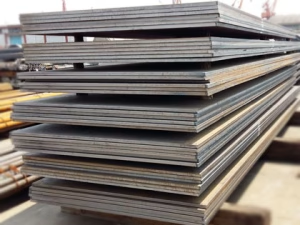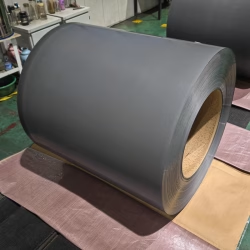

Hot Rolled Steel PlateUnderstanding the standard dimensions and permissible deviations is crucial for specifying and procuring hot-rolled steel plates. This guide outlines the common nominal sizes, thickness rules, and flatness (shape) requirements that ensure material consistency and fit for fabrication.
Nominal Size Specifications
The standard dimensions for hot-rolled steel plates are typically ordered in specific increments to streamline production and inventory.
-
Thickness: For steel plates with a thickness of less than 30 mm, the nominal size can be any multiple of 0.5 mm. For thicker plates with a thickness of 30 mm or greater, the size is in multiples of 1 mm.
-
Length: The length of the steel plate is usually specified in any dimension of 50 mm or a multiple of 100 mm.
Thickness Tolerances
While standard thickness tolerances apply to most products, special provisions exist for very heavy plates.
-
For steel plates with a thickness greater than 200mm, the acceptable thickness deviation can be determined through negotiation between the supplier and the purchaser. This agreed-upon tolerance must be clearly specified in the purchase contract.
Flatness and Shape Requirements
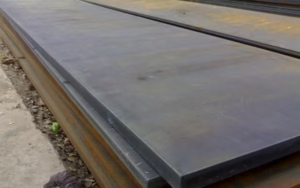
The flatness of a steel plate, often referred to as its “shape,” is measured by its unevenness or waviness. The standards classify flatness requirements based on the steel’s strength and heat treatment.
Measuring Flatness:
Unevenness is measured by placing a straightedge across the surface of the plate and measuring the maximum gap between the straightedge and the plate’s surface.
-
For wave spacings (the distance between contact points of the straightedge) not greater than 1000 mm, a 1000 mm long straightedge is used.
-
For longer wave spacings, a 2000 mm long straightedge is used.
-
Note: Any unevenness with a height of 2 mm or less is not considered a wave.
Flatness Classifications:
Requirements differ for two categories of steel:
-
Steel Type L: Applies to steel with a specified minimum yield strength ≤ 460 MPa that has not been quenched or quenched and tempered.
-
Steel Type H: Applies to steel with a specified minimum yield strength > 460 MPa and all quenched or quenched and tempered steel plates.
When the wave spacing is between 300 mm and 1000 mm, the maximum allowable unevenness must meet the following standards:
| Flatness Accuracy Class | Steel Type L Maximum Unevenness | Steel Type H Maximum Unevenness |
|---|---|---|
| Ordinary Flatness (PF.A) | 1.0% of the wave pitch | 1.5% of the wave pitch |
| Higher Flatness (PF.B) | 0.5% of the wave pitch | 0.5% of the wave pitch |
Key Takeaway: Specifying a higher flatness accuracy (PF.B) is essential for applications requiring superior surface levelness, such as precision machining or critical structural components, and ensures more stringent control for both L and H type steels.