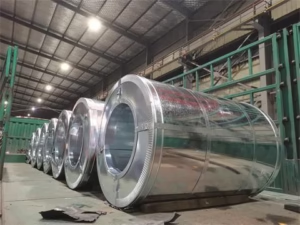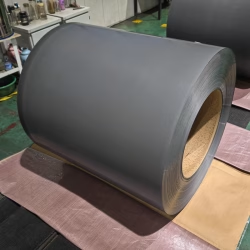
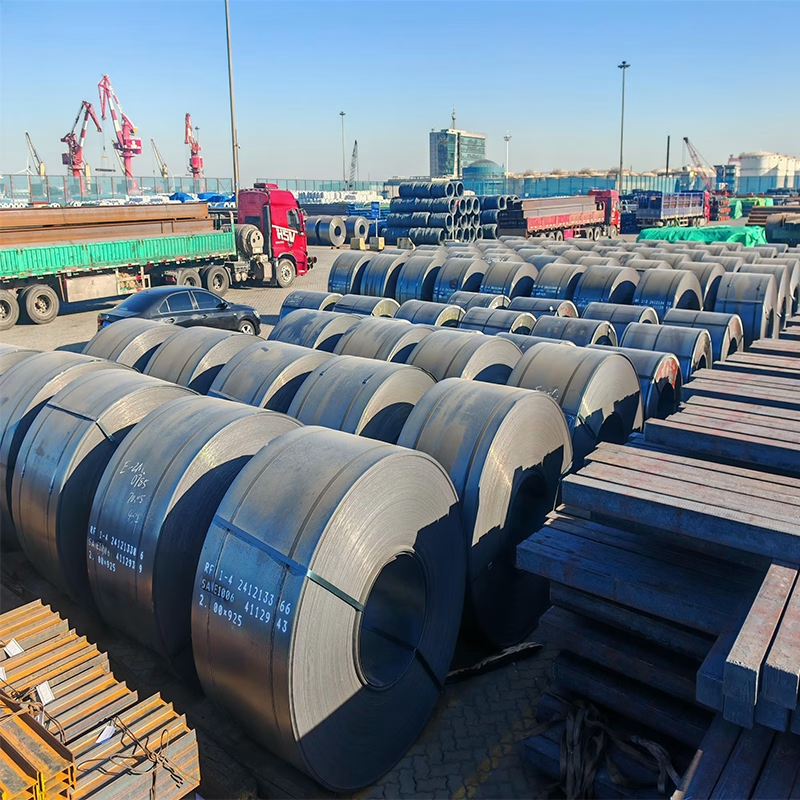
As a fundamental metal material across industries, the manufacturing quality of carbon steel coils directly determines product performance. Let’s explore this critical production process step-by-step.
1. Raw Material Preparation
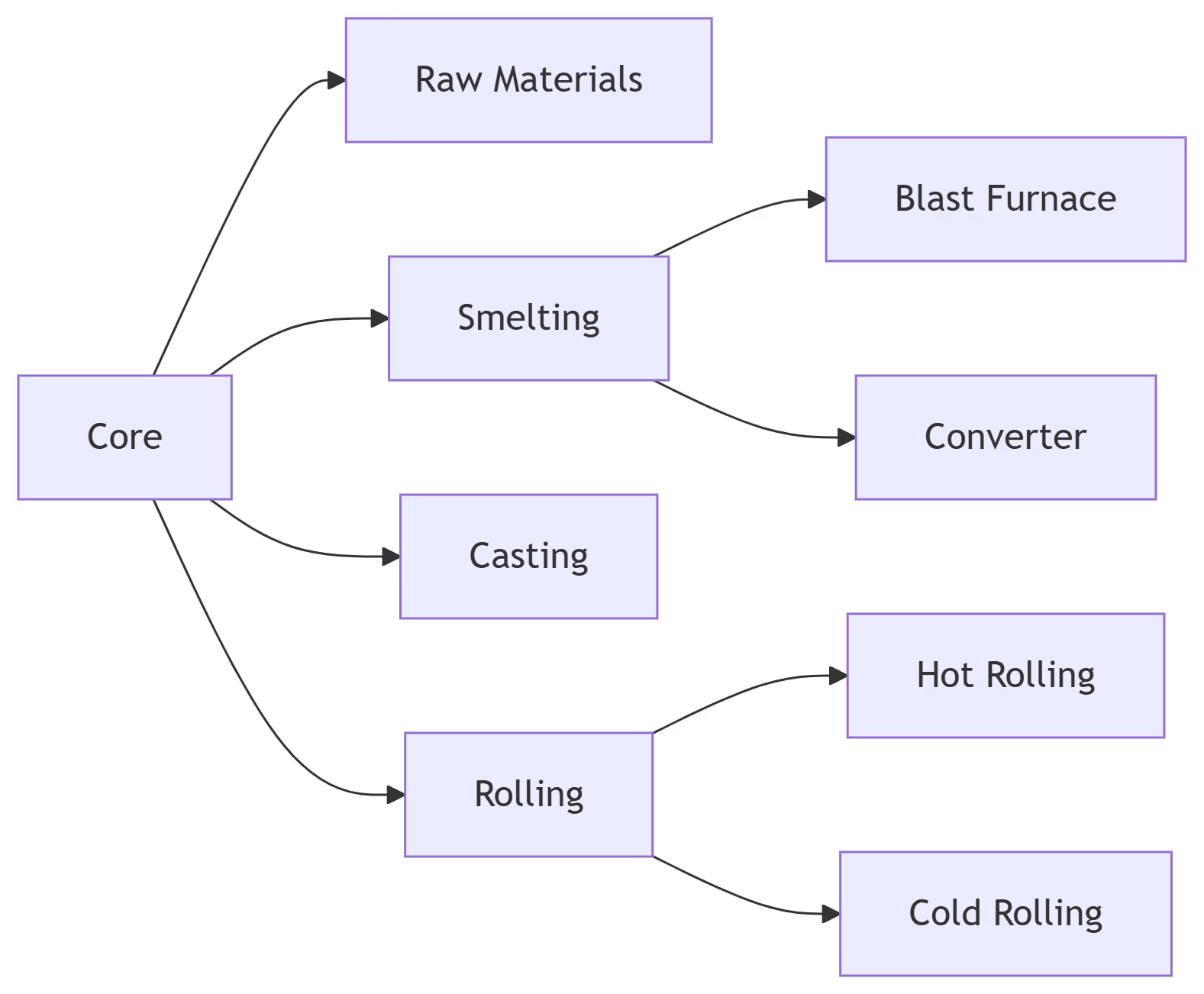
The process begins with sourcing high-quality raw materials: primarily iron ore, supplemented by coke, limestone, and other additives. Iron ore quality is paramount—high iron content with minimal impurities ensures superior end products.
Raw materials undergo essential pretreatment including crushing, screening, and sintering. These steps optimize particle size uniformity and reactivity, establishing optimal conditions for efficient smelting.
2. Smelting: Transforming Ore to Molten Metal
Smelting converts iron ore into molten iron through two primary methods:
-
Blast Furnace Ironmaking: Iron ore, coke, and limestone are loaded in precise ratios. High-temperature reduction reactions transform iron oxides into molten iron, with coke serving as both fuel and reducing agent.
-
Converter Steelmaking: Molten iron from blast furnaces is refined in converters. Oxygen lancing removes impurities while adjusting chemical composition to produce precise molten steel grades. This efficient, cost-effective method dominates modern steel production.
3. Continuous Casting: Shaping Molten Steel
Molten steel solidifies into semi-finished billets through continuous casting. Steel flows into water-cooled molds (casters), forming uniform billets through controlled solidification. This process delivers significant advantages:
-
Enhanced production efficiency
-
Reduced energy consumption
-
Improved dimensional accuracy and internal quality
Critical parameters—molten steel temperature, flow rate, and cooling intensity—require stringent control. These variables adjust according to final coil specifications and quality requirements.
4. Rolling: Forming the Final Product
Rolling transforms billets into finished coils through progressive thickness reduction and width expansion. Two distinct methods apply:
-
Hot Rolling: High-temperature processing offers high productivity and cost efficiency, though with moderate dimensional precision and surface quality.
-
Cold Rolling: Room-temperature deformation yields superior dimensional accuracy and surface finish, offset by higher production costs.
Throughout rolling, automated systems conduct real-time quality checks:
✓ Thickness monitoring
✓ Width verification
✓ Surface defect detection
This ensures strict compliance with international standards.
Conclusion
Producing premium carbon steel coils demands rigorous execution across these interconnected stages. Understanding this sophisticated manufacturing journey provides valuable insight into material performance characteristics—empowering informed selection and application decisions for optimal project outcomes.