Introduction
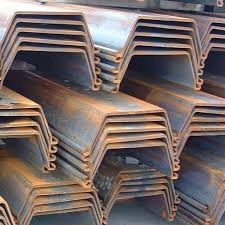
Steel sheet pile dimensions and tolerances play a crucial role in ensuring proper interlocking, structural integrity, and installation efficiency in construction projects. Understanding the precise dimensional requirements and allowable deviations is essential for engineers, contractors, and quality control professionals working with sheet pile walls, cofferdams, and retaining structures. This comprehensive guide provides detailed information about steel sheet pile size specifications and tolerance standards.
1. Primary Dimensional Tolerances
Height Allowable Deviation
-
Standard tolerance: ±3mm
-
Ensures consistent wall alignment and proper interlock engagement
-
Critical for maintaining uniform load distribution
Width Absolute Deviation
-
Allowable range: +10mm to -5mm
-
Positive tolerance allows for installation adjustments
-
Negative tolerance control prevents interlock clearance issues
Length Specifications
-
Standard tolerance: +200mm with no negative tolerance
-
Ensures adequate penetration depth
-
Allows for cutting to exact project requirements
2. Straightness and Alignment Tolerances
Bending Deflection Requirements
-
Maximum deflection: <1% over 2-meter span
-
Measured using 2-meter long locking sample
-
Ensures smooth interlock engagement during installation
-
Critical for maintaining wall alignment
Pile End Flatness
-
Maximum inclination: <3mm
-
Ensures proper bearing capacity
-
Facilitates accurate driving and alignment
Side Bend Limitations
-
Maximum deviation: ≤0.20% of total length (L)
-
Maintains vertical alignment during installation
-
Reduces installation stresses
Warping Control
-
Maximum warping: ≤0.20% of total length (L)
-
Prevents twisting during handling and installation
-
Ensures uniform interlock performance
Face Slope Requirements
-
Maximum slope: ≤3% of width (W)
-
Maintains planar alignment
-
Critical for exposed architectural applications
3. Sectional Dimension Tolerances
Effective Height (H) Tolerances
| Height Range | Allowable Deviation |
|---|---|
| H ≤ 200mm | ±4.0mm |
| H > 200mm | ±5.0mm |
| H > 300mm | ±7.0mm |
Web Thickness (t) Tolerances
| Thickness Range | Standard Tolerance | Special Tolerance |
|---|---|---|
| t < 10mm | ±1.0mm | +1.5mm, -0.7mm |
| t = 10-16mm | ±1.2mm | +1.5mm, -0.7mm |
| t > 16mm | ±1.5mm | — |
4. Weight and Delivery Specifications
Theoretical Weight Calculation
-
Based on standard steel density: 7.85 g/cm³
-
Standard delivery method unless otherwise specified
-
Provides consistent basis for project planning and costing
Actual Weight Delivery Option
-
Available through supplier-buyer negotiation
-
Must be clearly specified in contract documents
-
Useful for projects with strict weight limitations
Weight Tolerance Requirements
-
Allowable deviation: ±5% of theoretical weight
-
Ensures material consistency and quality control
-
Accounts for normal manufacturing variations
5. Quality Control and Inspection
Dimensional Verification
-
Regular calibration of measuring equipment
-
Statistical process control during manufacturing
-
Final inspection against specified tolerances
-
Documentation of all measurements
Interlock Performance Testing
-
Sample testing with standard locking pieces
-
Verification of smooth engagement
-
Assessment of deflection characteristics
-
Field installation compatibility checks
Straightness Verification
-
Laser alignment measurements
-
Visual inspection for visible deformations
-
Compliance with specified deflection limits
-
Documentation of any corrective actions
6. Practical Implications for Construction
Installation Considerations
-
Tolerance accumulation in long wall sections
-
Interlock clearance and engagement
-
Driving equipment compatibility
-
Alignment and plumbness control
Structural Performance
-
Load distribution efficiency
-
Interlock stress concentrations
-
Overall wall stability
-
Long-term serviceability
Project Planning
-
Material quantity calculations
-
Installation sequence planning
-
Tolerance management strategies
-
Quality assurance protocols
7. Industry Best Practices
Design Phase Considerations
-
Account for manufacturing tolerances in design
-
Specify appropriate tolerance classes
-
Consider installation methods and equipment
-
Plan for tolerance accumulation in long walls
Procurement Strategies
-
Clear specification of tolerance requirements
-
Verification of manufacturer capabilities
-
Consideration of project-specific needs
-
Balance between cost and precision requirements
Construction Management
-
Pre-installation inspection protocols
-
Field measurement and verification
-
Tolerance management during installation
-
Documentation and as-built records
8. Technical Compliance Table
| Parameter | Specification | Measurement Method | Compliance Requirement |
|---|---|---|---|
| Height Deviation | ±3mm | Direct measurement | Mandatory |
| Width Deviation | +10mm/-5mm | Calibrated instruments | Mandatory |
| Length Tolerance | +200mm/0mm | Tape measurement | Project-specific |
| Bending Deflection | <1% per 2m | Sample testing | Critical for interlock |
| Weight Tolerance | ±5% | Weight scale | Quality control |
Conclusion
The precise dimensional tolerances and specifications for steel sheet piles are fundamental to successful project execution and long-term structural performance. Understanding and implementing these tolerance requirements ensures proper interlock functionality, installation efficiency, and structural reliability.
The comprehensive tolerance system covering height, width, thickness, straightness, and weight provides a robust framework for quality assurance in sheet pile manufacturing and installation. By adhering to these specifications and implementing rigorous quality control measures, engineering professionals can ensure the successful implementation of sheet pile structures across various applications, from temporary excavations to permanent marine structures.
As construction technologies advance and project requirements become more demanding, these tolerance standards will continue to evolve, maintaining their crucial role in ensuring the safety, reliability, and performance of steel sheet pile structures worldwide.