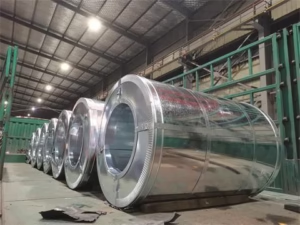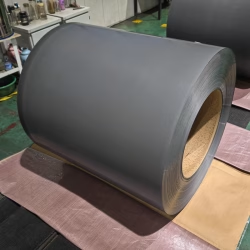
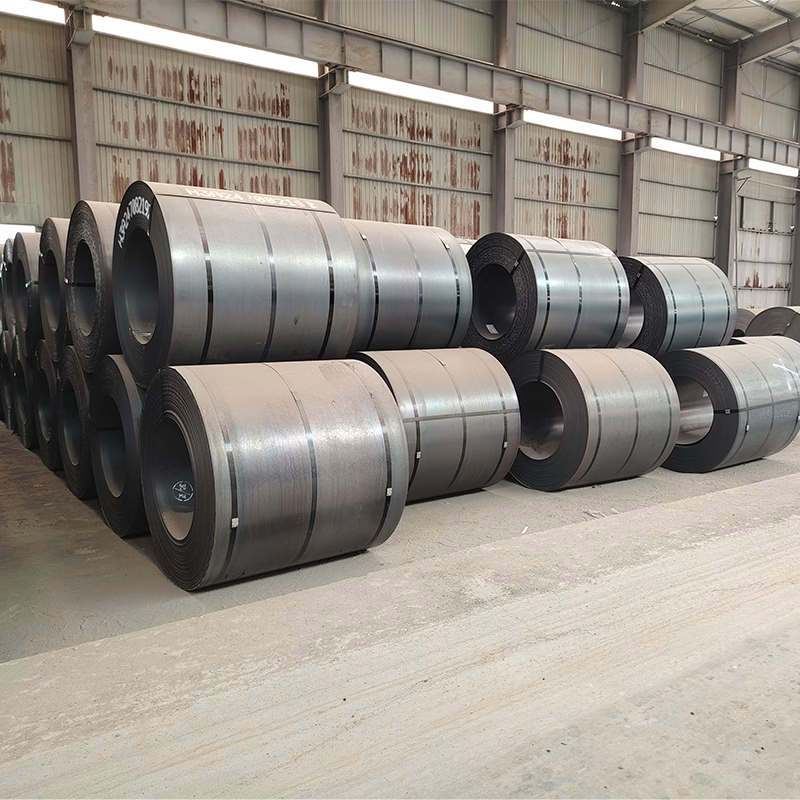
Carbon steel coils are essential materials in various industries, from automotive manufacturing to construction. Among the numerous grades available, SPHC and Q235 stand out as two commonly used options. This article will delve into the details of these two grades, helping you understand their differences and make informed choices for your projects.
What Are SPHC and Q235?
-
SPHC: A hot-rolled carbon steel coil grade specified in the Japanese Industrial Standard (JIS G3131). The abbreviation “SPHC” stands for “Steel Plate Hot Rolled Commercial”, indicating its primary application in general commercial fields that require forming processes. It is known for its good formability, making it suitable for bending, stamping, and other processing operations.
-
Q235: A carbon structural steel grade defined in the Chinese National Standard (GB/T 700). The “Q” in its name represents “yield strength” in Chinese, and “235” indicates that its minimum yield strength is 235 MPa. This grade is widely used in structural engineering due to its excellent comprehensive mechanical properties.
Standards and Specifications
The differences between SPHC and Q235 start with their respective standards, which regulate their chemical compositions, mechanical properties, and quality requirements.
-
SPHC: Complies with JIS G3131, a standard maintained by the Japanese Industrial Standards Committee (JISC). This standard focuses on the formability and processability of the steel, ensuring that SPHC can meet the needs of various forming operations.
-
Q235: Adheres to GB/T 700, published by the Standardization Administration of China (SAC). This standard emphasizes the structural performance of the steel, setting strict requirements for yield strength, tensile strength, and elongation to ensure its reliability in structural applications.
Chemical Composition
The chemical composition of a steel grade directly affects its performance. Here is a comparison of the typical chemical compositions of SPHC and Q235:
| Element | SPHC (JIS G3131) | Q235 (GB/T 700) |
|---|---|---|
| Carbon (C) | ≤0.12% | 0.14-0.22% |
| Manganese (Mn) | ≤0.50% | 0.30-0.65% |
| Silicon (Si) | ≤0.35% | ≤0.30% |
| Phosphorus (P) | ≤0.035% | ≤0.045% |
| Sulfur (S) | ≤0.035% | ≤0.045% |
The lower carbon content in SPHC contributes to its better formability, while the relatively higher carbon and manganese contents in Q235 enhance its strength, making it more suitable for structural applications.
Mechanical Properties
Mechanical properties are crucial for determining the suitability of a steel grade for specific applications.
-
SPHC:
- Yield strength: Generally 270-370 MPa (varies with thickness)
- Tensile strength: 300-500 MPa
- Elongation: ≥30% (for thickness <1.6mm)
Its high elongation rate makes it easy to form into complex shapes, which is why it is often used in manufacturing parts that require precise forming.
-
Q235:
- Yield strength: ≥235 MPa
- Tensile strength: 375-500 MPa
- Elongation: 26-21% (decreases as thickness increases)
With its moderate strength and good toughness, Q235 is widely used in structural engineering to bear loads.
Applications
-
SPHC:
- Automotive industry: Used in the production of car body parts, such as fenders and door panels, which require forming.
- Home appliances: Applied in the manufacturing of refrigerator panels, washing machine drums, etc.
- Pipe and tube manufacturing: Suitable for making ordinary pipes that do not need to withstand high pressure.
At Zhongtang Metal, we provide high-quality SPHC carbon steel coils that meet the needs of various manufacturing industries.
-
Q235:
- Construction industry: Used in the construction of buildings, bridges, and other structures as beams, columns, and steel frames.
- Machinery manufacturing: Applied in the production of mechanical parts that bear moderate loads.
- Steel structures: Used for making welded structures and components.
For Q235 carbon steel coils suitable for structural projects, you can find reliable products in our Zhongtang Metal’s carbon steel coil collection.
How to Choose Between SPHC and Q235?
- Choose SPHC if your project requires good formability, such as for stamping and bending processes, and strength is not the primary consideration.
- Choose Q235 if your application demands structural strength and load-bearing capacity, such as in construction and heavy machinery manufacturing.
Conclusion
SPHC and Q235 are both important carbon steel coil grades, each with its own unique characteristics and application fields. Understanding their differences can help you select the right material for your specific needs. Whether you need SPHC for manufacturing or Q235 for construction, Zhongtang Metal is your trusted partner, offering high-quality carbon steel coils and professional services. For more information on carbon steel coils, you can also refer to authoritative resources such as the World Steel Association for industry insights and standards.