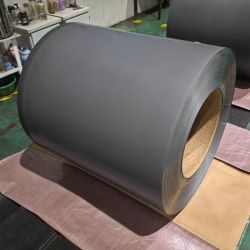

Introduction
Wear resistant steel plates are engineered materials designed to withstand extreme abrasive conditions in demanding industrial applications. Understanding their dimensional specifications, hardness classifications, and international standards is crucial for selecting the right material for mining, construction, and material handling equipment. This comprehensive guide provides detailed information about wear resistant steel plate sizes according to GB/T standards and their international equivalents.
1. Hardness Classification and Grading System
Brinell Hardness Testing Method
The hardness of abrasion resistant steel is determined using the Brinell hardness test (HBW), which measures the indentation created by a tungsten carbide ball under specific load conditions. This standardized testing method ensures consistent quality assessment across different manufacturers and applications.
Chinese Grading System (GB/T 24186-2022)
-
Naming Convention: “NM” (Nai Mo – wear resistant in Chinese pinyin) + Brinell hardness value
-
Common Grades:
-
NM300: Surface hardness 270-330 HBW
-
NM360: Surface hardness 330-400 HBW
-
NM400: Surface hardness 370-430 HBW
-
NM450: Surface hardness 420-480 HBW
-
NM500: Surface hardness 470-540 HBW
-
NM550: Surface hardness 520-580 HBW
-
NM600: Surface hardness 570-640 HBW
-
International Grade Equivalents
-
AR200 & AR235: 180-260 BHN
-
AR400: 360-440 BHN
-
AR450: 430-480 BHN
-
AR500: 460-544 BHN
-
AR600: 570-625 BHN
2. Dimensional Specifications (GB/T 709-2019)
Standard Size Ranges
| Parameter | Specification Range | Common Applications |
|---|---|---|
| Thickness | 3mm – 100mm | – Thin plates (3-20mm): lining, covers – Medium plates (20-50mm): buckets, chutes – Thick plates (50-100mm): crushers, heavy equipment |
| Width | 1,000mm – 4,600mm | – Narrow widths (1000-2000mm): standard components – Medium widths (2000-3500mm): conveyor systems – Wide plates (3500-4600mm): large surface coverage |
| Length | 2,000mm – 16,000mm | – Short lengths (2000-6000mm): replacement parts – Medium lengths (6000-12000mm): standard fabrication – Long lengths (12000-16000mm): custom applications |
3. Weight Calculation and Measurement
Standard Weight Formula
Weight (kg) = Thickness (mm) × Width (mm) × Length (mm) × 0.00785
Practical Calculation Examples
-
NM400 plate: 10mm × 1500mm × 6000mm
-
Weight = 10 × 1500 × 6000 × 0.00785 = 706.5 kg
-
-
NM500 plate: 25mm × 2000mm × 8000mm
-
Weight = 25 × 2000 × 8000 × 0.00785 = 3,140 kg
-
Weight Optimization Considerations
-
Thinner plates for weight-sensitive applications
-
Thicker plates for extreme wear conditions
-
Balanced selection for optimal performance and cost efficiency
4. Permissible Dimensional Tolerances
General Tolerance Guidelines
While specific tolerances vary by manufacturer and application, general principles include:
Thickness Tolerances
-
Plates under 10mm: ±0.2mm to ±0.5mm
-
Plates 10-30mm: ±0.5mm to ±1.0mm
-
Plates over 30mm: ±1.0mm to ±2.0mm
Width and Length Tolerances
-
Standard tolerance: ±10mm to ±30mm
-
Precision cutting: ±5mm or better
-
Custom requirements: Negotiable based on application needs
Calculation of Allowable Deviations
-
Dependent on actual product dimensions
-
Consideration of manufacturing capabilities
-
Alignment with end-use requirements
5. Application-Based Size Selection
Mining Industry Applications
-
Bucket Liners: 10-40mm thickness, custom widths and lengths
-
Chute Linings: 6-25mm thickness, various sizes
-
Screen Decks: 8-20mm thickness, precise dimensions
-
Hopper Liners: 15-50mm thickness, large plate sizes
Construction Equipment
-
Excavator Buckets: 15-40mm thickness, curved and flat sections
-
Bulldozer Blades: 20-50mm thickness, various widths
-
Loader Attachments: 10-30mm thickness, multiple configurations
Material Handling Systems
-
Conveyor Components: 8-25mm thickness, strip and plate forms
-
Transfer Points: 12-30mm thickness, custom shapes
-
Storage Bunkers: 10-40mm thickness, large coverage areas
6. Fabrication and Processing Considerations
Cutting and Machining
-
Plasma cutting capabilities for all standard sizes
-
Waterjet cutting for precision components
-
Laser cutting for complex shapes in thinner plates
Bending and Forming
-
Minimum bending radii based on thickness and grade
-
Cold forming limitations for higher hardness grades
-
Heat treatment considerations for formed components
Welding Requirements
-
Pre-heat temperatures based on thickness and grade
-
Suitable welding consumables for different hardness levels
-
Post-weld heat treatment recommendations
7. Quality Assurance and Inspection
Dimensional Verification
-
Laser measurement systems for precise dimensioning
-
Ultrasonic thickness testing for consistency
-
Surface flatness and straightness checks
Hardness Testing Protocols
-
Regular Brinell hardness verification
-
Section hardness testing for thicker plates
-
Hardness mapping for large plates
Certification Requirements
-
Mill test certificates with actual dimensions
-
Third-party inspection reports
-
Compliance certification for specific applications
8. International Standards Comparison
| Standard/Grade | Thickness Range | Hardness Range | Primary Applications |
|---|---|---|---|
| GB/T NM400 | 3-100mm | 370-430 HBW | General mining, construction |
| GB/T NM500 | 3-70mm | 470-540 HBW | Heavy mining, quarrying |
| GB/T NM600 | 3-60mm | 570-640 HBW | Extreme abrasion applications |
| AR400 | Varies | 360-440 BHN | North American equivalents |
| AR500 | Varies | 460-544 BHN | High impact applications |
Conclusion
Selecting the appropriate size and grade of wear resistant steel plates requires careful consideration of application requirements, environmental conditions, and fabrication capabilities. The comprehensive size range available under GB/T 709-2019, combined with the precise hardness classifications of GB/T 24186-2022, provides engineers and designers with flexible options for optimizing equipment performance and service life.
Understanding the relationship between plate dimensions, hardness characteristics, and international grade equivalents enables informed material selection decisions. Proper specification of wear resistant steel plates contributes significantly to reduced maintenance costs, extended equipment lifespan, and improved operational efficiency across various industrial sectors.
As technology advances, manufacturers continue to develop new sizes and grades to meet evolving industry demands, ensuring that wear resistant steel plates remain at the forefront of materials technology for abrasive applications.