
Introduction
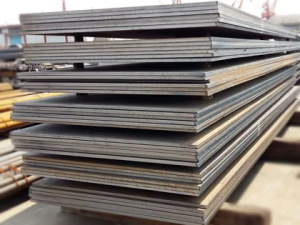
Bridge steel plates are fundamental components in modern infrastructure projects, requiring precise dimensional specifications to ensure structural integrity and safety. Understanding the size requirements and permissible deviations according to Chinese national standards is crucial for engineers, contractors, and procurement specialists involved in bridge construction projects. This comprehensive guide details the dimensional specifications for bridge steel plates according to GB/T 714-2015 and GB/T 1591-2018 standards.
GB/T 714-2015: Structural Steel for Bridge
Dimensional Specifications
Thickness Range:
-
Minimum thickness: 6mm
-
Maximum thickness: 250mm
-
Application scope covers plates up to 150mm for general bridge structures
Width Specifications:
-
Standard width range: 1,500mm to 4,700mm
-
Optimized for efficient bridge deck construction and minimal welding requirements
Length Requirements:
-
Standard length: 4,000mm to 16,000mm
-
Suitable for various span requirements in bridge construction
Weight Considerations
-
Weight calculation based on actual dimensions and thickness
-
Standard steel density of 7.85 g/cm³ applies
-
Custom weight calculations required for specific project requirements
Permissible Deviations
-
Dimensional tolerances allowed within specified limits
-
Deviations account for manufacturing processes and practical application needs
-
Specific tolerance ranges determined by plate thickness and application
GB/T 1591-2018: High Strength Low Alloy Structural Steels
Size and Weight Requirements
Thickness Specifications:
-
Range: 6mm to 150mm
-
Covers most common requirements for bridge construction
-
Suitable for various structural components including decks and supports
Width Dimensions:
-
Available widths: 1,500mm to 4,700mm
-
Consistent with modern bridge design requirements
-
Enables efficient material utilization
Length Parameters:
-
Extensive range: 4,000mm to 25,000mm
-
Supports long-span bridge constructions
-
Reduces the need for excessive welding joints
Weight Standardization:
-
Mass calculated per square meter (kg/m²)
-
Standardized calculation method for consistency
-
Enables accurate project planning and cost estimation
Precise Permissible Deviations
Thickness Tolerance:
-
Allowable deviation: ±0.5mm
-
Ensures consistent load-bearing capacity
-
Maintains structural integrity across all plates
Width Tolerance:
-
Positive deviation: +20mm
-
Negative deviation: 0mm (no undersizing permitted)
-
Guarantees adequate coverage in bridge deck applications
Length Tolerance:
-
Positive deviation: +20mm
-
Negative deviation: 0mm (no shortening allowed)
-
Ensures proper fit and alignment in construction
Practical Applications and Selection Guidelines
Bridge Type Considerations
Highway Bridges:
-
Recommended thickness: 12-40mm for deck plates
-
Width selection based on lane requirements
-
Length determined by span design
Railway Bridges:
-
Typically thicker plates: 20-60mm
-
Enhanced strength requirements for dynamic loads
-
Strict adherence to dimensional tolerances
Pedestrian Bridges:
-
Lighter thickness options: 8-25mm
-
Flexible width and length combinations
-
Emphasis on aesthetic considerations
Manufacturing and Fabrication Implications
Cutting and Welding:
-
Precise tolerances reduce material waste
-
Consistent dimensions facilitate automated welding
-
Standard sizes optimize manufacturing efficiency
Transportation and Handling:
-
Maximum length of 25,000mm requires special transportation planning
-
Weight considerations for lifting and installation equipment
-
Storage requirements based on plate dimensions
Quality Assurance Measures
Dimensional Verification:
-
Regular calibration of measuring equipment
-
Statistical process control for manufacturing
-
Final inspection against specified tolerances
Documentation Requirements:
-
Mill certificates with actual dimensions
-
Third-party verification for critical applications
-
Traceability throughout the supply chain
Industry Best Practices
Design Optimization
-
Select standard sizes to minimize cutting waste
-
Consider manufacturing capabilities during design phase
-
Account for permissible deviations in structural calculations
Procurement Strategies
-
Specify required tolerances clearly in purchase orders
-
Verify supplier capability to meet dimensional requirements
-
Consider both GB/T 714-2015 and GB/T 1591-2018 for comprehensive coverage
Project Planning Considerations
-
Lead times for non-standard sizes
-
Storage requirements for large plates
-
Handling equipment specifications based on plate dimensions
Conclusion
The GB/T 714-2015 and GB/T 1591-2018 standards provide comprehensive guidelines for bridge steel plate dimensions, ensuring consistent quality and performance in bridge construction projects. By understanding these specifications and their practical implications, engineers and contractors can optimize material selection, improve construction efficiency, and ensure long-term structural reliability.
The precise dimensional requirements and permissible deviations outlined in these standards reflect China’s commitment to infrastructure quality and safety, while providing flexibility for various bridge design requirements. Proper implementation of these standards contributes to the successful completion of durable and safe bridge structures that meet modern engineering demands.