A Practical Guide to Selecting Thickness, Coating Weight, and Standards for Long-Lasting Roofing Projects
1. Quick Answer
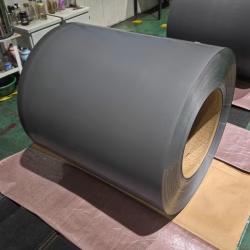
Galvanized steel coil for roofing is selected based on three critical factors: thickness (typically 0.30mm–0.60mm), zinc coating weight (minimum Z120, with Z275 recommended for coastal areas), and appropriate surface treatment (chromated or passivated). These specifications determine the roofing material’s corrosion resistance, structural integrity, and service life. The right combination ensures 20–50 years of performance depending on environmental exposure.
2. Key Takeaways
-
Z120 coating weight is the minimum recommended for standard roofing applications because it provides adequate corrosion protection for urban and suburban environments with 15–25 years of expected service life.
-
For coastal and marine environments, Z275 coating weight is essential as the heavier zinc layer (approximately 20 microns per side) resists salt-induced corrosion that would quickly degrade lighter coatings.
-
Thickness selection between 0.30mm and 0.60mm directly affects roof load-bearing capacity, with heavier gauges required for wide purlin spacing and areas subject to snow or foot traffic.
-
Surface treatments such as chromate passivation prevent white rust formation during storage and transport, while oiled surfaces provide temporary protection before painting.
-
Climate-specific selection prevents premature failure—what works in dry inland areas will fail rapidly in marine environments without appropriate coating weight adjustments.
-
Always request mill test certificates and verify coating weight reports before purchase, as these documents provide the only reliable proof that your material meets specifications.
3. Terminology Snapshot
-
Zinc Coating Weight (Zxxx) — Mass of zinc applied to both sides of steel sheet, measured in grams per square meter (g/m²). Z120 means 120g/m² total both sides.
-
Base Metal Thickness — Thickness of steel substrate before zinc coating; excludes coating thickness.
-
Passivation — Chemical treatment applied to freshly galvanized steel to prevent white rust formation during storage.
-
Spangle — Visible crystalline pattern on galvanized steel surface; can be controlled as regular, minimized, or zero.
-
Mill Test Certificate (MTC) — Official document from manufacturer certifying chemical composition, mechanical properties, and coating weight.
-
G90 — ASTM designation equivalent to Z275 (0.90 oz/ft² total both sides).
4. Understanding the User Problem
Professionals searching for “how to choose galvanized steel coil for roofing” face a common challenge: balancing upfront material costs against long-term performance requirements. The market offers dozens of combinations of thicknesses, coating weights, and surface treatments, and selecting incorrectly leads to costly consequences.
The core pain points include:
-
Premature corrosion failures when coating weight is too light for the local environment
-
Structural sagging or oil-canning when thickness is insufficient for the roof design
-
White rust damage during storage when surface treatment is mismatched to handling conditions
-
Warranty voidance when material doesn’t meet manufacturer or building code specifications
-
Confusion between standards (ASTM, JIS, EN) and what coating designations actually mean in terms of performance
Market confusion is compounded by inconsistent terminology. Buyers may see “G90” (ASTM), “Z275” (metric/EN), or “Z27” (JIS) and not realize these all represent approximately the same coating weight. Similarly, thickness may be specified in millimeters, gauge numbers, or millimeters with different meanings across regions.
The key decision factors that professionals must evaluate are:
-
What is the specific climate and exposure condition?
-
What are the structural requirements of the roof design?
-
What handling and installation conditions will the material face?
-
What is the expected service life, and what maintenance is acceptable?
5. Why Galvanized Steel Works for Roofing
Galvanized steel is the dominant roofing material for industrial, agricultural, and commercial buildings because it solves the fundamental problem of steel’s vulnerability to corrosion through a elegantly simple metallurgical solution.
The corrosion mechanism works as follows:
Steel exposed to oxygen and moisture forms iron oxide (rust), which is porous, non-adherent, and progressively consumes the base metal. This is a chemical reaction that cannot be prevented—only delayed.
Galvanizing solves this through two protective mechanisms:
-
Barrier Protection: The zinc coating physically isolates the steel from oxygen and moisture. At 20 microns (Z275), this barrier is dense and durable, significantly slowing corrosion initiation.
-
Sacrificial (Galvanic) Protection: Zinc is more electrochemically active than steel. At cut edges, drill holes, and scratches where the steel is exposed, the surrounding zinc corrodes preferentially, protecting the steel. This “self-healing” property means even damaged areas remain protected.
Why this matters for roofing:
Roofing undergoes unique stresses that make this dual protection essential:
-
Thousands of fastener penetrations create exposed edges
-
Shearing and cutting during installation creates raw edges
-
Weather exposure cycles through wet, dry, hot, and cold conditions
-
UV radiation degrades organic coatings but does not affect zinc
The zinc-iron alloy layers formed during hot-dip galvanizing are metallurgically bonded—not simply coated on. This means the protection won’t peel or delaminate during roll-forming, bending, or thermal expansion.
For deeper understanding of coating mechanisms, see our Galvanized Steel Coil product guide.
6. Key Selection Factors Explained
6.1 Thickness Selection (Base Metal Gauge)
Technical Explanation:
Galvanized steel roofing is specified by base metal thickness—the steel thickness before zinc coating. The coating adds approximately 20–40 microns total, which is negligible for structural calculations.
Thickness ranges and applications:
| Thickness | Typical Applications | Structural Considerations |
|---|---|---|
| 0.30–0.35mm | Light agricultural sheds, temporary structures, low-cost housing | Maximum purlin spacing 0.8–1.0m; limited load capacity |
| 0.40–0.45mm | Standard industrial roofing, commercial buildings | Purlin spacing 1.2–1.5m; adequate for light foot traffic |
| 0.47–0.50mm | High-wind areas, premium commercial construction | Spacing up to 1.8m; resists oil-canning |
| 0.55–0.60mm | Heavy industrial, areas with snow load, walkable roofs | Maximum spacing 2.0m; structural grade recommended |
The selection logic:
For a given roof span (distance between purlins), thicker steel deflects less under load. Building codes specify minimum thickness based on:
-
Design wind speed (thicker for cyclone-prone areas)
-
Snow load requirements (thicker for heavy snow regions)
-
Roof access requirements (thicker if maintenance traffic expected)
-
Profile depth (deeper profiles can use slightly thinner steel)
Common mistake: Specifying thickness without considering profile design. A 0.40mm steel in a high-rib profile may outperform 0.50mm in a shallow profile. Always match thickness to the specific roofing profile’s structural properties.
6.2 Coating Weight (Zinc Mass)
Technical Explanation:
Coating weight determines how much zinc protects the steel—directly proportional to corrosion resistance. Designations like Z120 mean 120 grams of zinc per square meter (total both sides).
The corrosion relationship:
Corrosion rate is approximately linear with zinc thickness, but environmental factors dramatically affect consumption rate. In rural atmospheres, zinc corrodes at 0.5–1.0 microns per year. In marine environments, this can reach 2–4 microns annually.
Minimum recommendations by environment:
| Environment | Minimum Coating | Expected Life to First Maintenance* |
|---|---|---|
| Dry inland (desert, arid) | Z80 | 15–20 years |
| Urban/industrial moderate | Z120 | 20–25 years |
| Standard suburban | Z180 | 25–30 years |
| Coastal (1–10km from ocean) | Z275 | 25–35 years |
| Direct marine spray | Z275 + paint | 20–30 years (with maintenance) |
*Expected life varies significantly with specific local conditions, prevailing winds, and building orientation.
The coastal requirement explained:
Marine environments accelerate corrosion through:
-
Salt particles that increase electrolyte conductivity
-
Chloride ions that penetrate zinc oxide layers
-
Wet-dry cycles that concentrate salts on surfaces
-
Higher humidity and longer time-of-wetness
Z275 provides approximately 20 microns of zinc per side. At marine corrosion rates of 2–3 microns annually, this provides 7–10 years before zinc depletion—but the sacrificial protection extends useful life as the remaining alloy layers continue protecting.
**For detailed coating weight analysis, see our guide: What Does Z275 Mean in Galvanized Steel? **
6.3 Surface Treatment Options
Why surface treatment matters:
Fresh galvanized steel is reactive. During storage and transport, moisture between closely packed sheets can cause “white rust”—zinc oxide/hydroxide that, while not structurally damaging, is unsightly and can indicate coating consumption.
Available treatments:
| Treatment | Application | Benefit | Limitation |
|---|---|---|---|
| Chromate Passivation | Clear chemical film | Prevents white rust during storage; improves paint adhesion | Hexavalent chrome restricted in some regions |
| Trivalent Chromate | Clear chemical film | Same protection, environmentally compliant | Slightly higher cost |
| Oiling | Thin oil film | Low-cost temporary protection | Must be removed before painting; attracts dust |
| Phosphate | Conversion coating | Excellent paint base | Not for bare exposure |
| Untreated | None | Lowest cost | High white rust risk; immediate installation required |
Selection guidance:
-
For painted roofing (PPGI): Specify chromate or phosphate treatment—essential for coating adhesion and preventing underfilm corrosion.
-
For bare galvanized exposure: Passivation recommended unless installation occurs within 2–4 weeks of production.
-
For tropical, high-humidity shipments: Always specify passivation regardless of timeline. Container condensation during ocean freight causes severe white rust on untreated material.
White rust prevention during storage:
Even passivated material requires:
-
Good ventilation (not tightly wrapped in plastic)
-
Angled storage for drainage
-
Protection from direct rain
-
Separation between sheets if storing long-term
6.4 Climate and Environmental Factors
Beyond coating weight, consider:
Temperature extremes:
-
High heat (desert): Thermal expansion requires proper allowance in sheet lengths
-
Freeze-thaw cycles: Condensation frequency increases corrosion risk
-
Industrial heat sources: May accelerate coating consumption
Air quality:
-
Industrial pollution (SO₂, NOₓ): Creates acidic conditions accelerating zinc corrosion
-
Agricultural ammonia (livestock): Corrodes zinc; requires heavier coating or paint
-
Coastal salt: As discussed
Roof microclimate:
-
Shaded areas stay wet longer, corroding faster
-
North-facing slopes (southern hemisphere) or south-facing (northern hemisphere) receive less UV drying
-
Areas under trees accumulate moisture and debris
Design factors affecting material selection:
| Factor | Impact | Material Adjustment |
|---|---|---|
| Low roof pitch (<5°) | Slower drainage, longer wet time | Increase coating weight one level |
| Complex valleys | Water concentration areas | Consider thicker coating or painted protection |
| Shaded by structures | Reduced drying | Increase coating weight |
| Proximity to ocean | Salt exposure | Minimum Z275 |
| Industrial stack emissions | Acidic deposition | Z275 minimum; consider painted |
7. Typical Roofing Galvanized Steel Specification Guide
For quick reference, here are standard specifications for common roofing applications:
Standard Industrial Roofing Specification
| Parameter | Specification |
|---|---|
| Base metal thickness | 0.45mm |
| Coating weight | Z180 (180 g/m² total both sides) |
| Standard | ASTM A653 / EN 10346 DX51D / JIS G3302 SGCC |
| Surface treatment | Chromated (trivalent) |
| Width options | 1000mm, 1200mm (custom widths available) |
| Coil weight | 3–5 metric tons (for ease of handling) |
| Coil ID | 508mm or 610mm standard |
Coastal/High-Corrosion Specification
| Parameter | Specification |
|---|---|
| Base metal thickness | 0.48–0.55mm |
| Coating weight | Z275 (275 g/m² total both sides) |
| Standard | ASTM A653 G90 / EN 10346 DX51D+Z275 |
| Surface treatment | Chromated (mandatory) |
| Width options | As required |
| Coil weight | 3–5 metric tons |
Agricultural/Light Commercial Specification
| Parameter | Specification |
|---|---|
| Base metal thickness | 0.35–0.40mm |
| Coating weight | Z120–Z180 |
| Standard | JIS G3302 SGCC or equivalent |
| Surface treatment | Oiled or chromated (depending on storage) |
| Width options | 1000mm, 1200mm |
| Coil weight | 3–5 metric tons |
These specifications are available directly from Zhongtang Metal’s galvanized steel coil production with full mill certification.
8. International Standards for Galvanized Roofing Steel
Understanding which standard applies to your project is essential for specification compliance and import clearance.
| Standard | Region | Common Designations | Equivalent Coating Designations |
|---|---|---|---|
| ASTM A653 / A653M | USA, Canada, Americas | G30, G60, G90, G115, G140, G165, G185, G210, G235 | G90 ≈ Z275 |
| EN 10346 | Europe, Middle East, Africa, Australia | DX51D, DX52D, DX53D +Z | Z100, Z140, Z200, Z225, Z275, Z350, Z450 |
| JIS G3302 | Japan, South Korea, Southeast Asia | SGCC, SGHC, SGC340, SGC400, SGC440, SGC490, SGC570 | Z08, Z10, Z12, Z18, Z20, Z22, Z25, Z27, Z35, Z43, Z50, Z60 |
| GB/T 2518 | China | DC51D, DC52D, DC53D, DC54D, DC56D | Z60–Z600 |
| ISO 3575 | International (many regions) | Commercial quality, forming quality | Z100–Z600 |
Key Points on Standards:
-
ASTM A653 G90 is the most common specification in North American construction markets
-
EN 10346 DX51D+Z275 is standard throughout Europe and the Middle East
-
JIS G3302 SGCC Z27 dominates Asian markets
-
GB/T 2518 is widely accepted in China and increasingly in Belt and Road projects
Important: Always confirm which standard your project requires. Specifications are not automatically interchangeable without verification of mechanical properties and testing methods.
9. Comparison With Alternative Roofing Materials
| Feature / Metric | Galvanized Steel (Z275) | Galvalume (AZ150) | Aluminum | Painted Steel (PPGI) |
|---|---|---|---|---|
| Corrosion Mechanism | Sacrificial zinc | Barrier + limited sacrificial | Natural oxide | Barrier coating |
| Typical Lifespan (Marine) | 25–35 years | 30–40 years | 40–50+ years | 20–30 years (to first repaint) |
| Coating Thickness | 20 microns per side (Z275) | ~20 microns alloy | N/A (solid metal) | 20–35 microns paint |
| Cut Edge Protection | Excellent (sacrificial) | Limited | Excellent (self-passivating) | None—requires edge sealing |
| Heat Reflectivity | Moderate (~40%) | Excellent (~75%) | Excellent | Depends on color |
| Cost Index (1.0 baseline) | 1.0 | 1.15–1.25 | 2.5–3.0 | 1.2–1.4 |
| Formability | Excellent | Good | Excellent | Good |
| Repairability | Easy (zinc-rich paint) | Moderate | Difficult (welding) | Moderate |
| Best Use Case | Standard roofing, budget-conscious, edge-intensive designs | Long-life roofing, hot climates, coastal | Premium marine, architectural | Colored roofs, architectural matching |
Comparative Analysis:
Galvanized vs. Galvalume:
Galvanized steel’s key advantage is superior cut-edge protection through sacrificial action. For roofs with many penetrations (screw-down systems), field cutting, or complex flashings, galvanized often outperforms Galvalume despite Galvalume’s better flat-surface corrosion resistance. Galvalume requires edge sealing or lapped designs that protect cut edges.
Galvanized vs. Aluminum:
Aluminum offers unmatched marine longevity but costs 2.5–3 times more and has lower strength, requiring thicker gauges for equivalent structural capacity. Galvanized steel provides better value where budget matters and 30-year life is acceptable.
Galvanized vs. Painted Steel (PPGI):
PPGI adds color and can extend life through the paint barrier, but once paint fails, the underlying galvanizing provides backup protection. For colored roofs, PPGI with Z120–Z180 base offers excellent performance. For bare installations, standard galvanized is more economical.
**For colored roofing options, see our PPGI Steel product page **
10. Cost and Performance Considerations
Initial Material Cost
Galvanized steel coil pricing varies with:
| Factor | Cost Impact | Rationale |
|---|---|---|
| Thickness | +8–12% per 0.1mm increase | More steel mass, more rolling energy |
| Coating weight | +5–8% per level (Z120→Z180→Z275) | More zinc consumed, slower line speeds |
| Surface treatment | +2–5% for passivation | Chemical and process costs |
| Width | Narrower widths often cost more per ton | Less efficient production, more edge trim |
| Order quantity | 20–30 ton minimum for best pricing | Production efficiency, shipping economics |
Typical price ranges (estimates, market-dependent):
-
Z120, 0.40mm: Baseline reference
-
Z180, 0.40mm: +5–8% over baseline
-
Z275, 0.40mm: +12–15% over baseline
-
Z275, 0.50mm: +20–25% over baseline
Lifecycle Cost Analysis
The true cost is not purchase price but cost per year of service.
| Scenario | Coating | Initial Cost | Expected Life | Annualized Cost |
|---|---|---|---|---|
| Inland shed | Z80 | 0.85 | 15 years | 0.057/year |
| Standard industrial | Z120 | 1.0 | 20 years | 0.050/year |
| Premium industrial | Z275 | 1.15 | 35 years | 0.033/year |
| Coastal (Z120 mistake) | Z120 | 1.0 | 8–10 years | 0.100–0.125/year + replacement cost |
The coastal example is critical: Saving 15% on coating weight in a marine environment leads to replacement in 8–10 years instead of 25–30. The “savings” results in 3× higher long-term cost plus disruption of building use during replacement.
Maintenance Requirements
| Coating Weight | Maintenance Expectation |
|---|---|
| Z80–Z120 | Inspect at 10 years; may need spot painting at 15–20 |
| Z180 | Inspect at 15 years; typically no maintenance to 25 |
| Z275 | Minimal inspection; clean if coastal to prevent salt accumulation |
Maintenance actions that extend life:
-
Annual washing in coastal areas (removes salt)
-
Prompt repair of scratches or damage (zinc-rich paint)
-
Keeping roof clear of debris that retains moisture
-
Maintaining gutter systems to prevent water backup
11. Supplier Checklist Before Purchasing Galvanized Steel Coil
Use this checklist when evaluating suppliers to ensure you receive material that meets specifications:
Documentation Verification
| Item | What to Check | Why It Matters |
|---|---|---|
| Mill Test Certificate (MTC) | Verify chemical composition, mechanical properties, and coating weight match order | Only official proof of specification compliance |
| Coating weight report | Confirm Zxxx value meets minimum requirements | Underweight coating leads to premature failure |
| Third-party inspection report | If applicable, verify independent testing | Adds verification layer for critical projects |
| Country of origin | Confirm stated origin matches documentation | Import regulations and anti-dumping duties |
Physical Verification
| Item | What to Check | Why It Matters |
|---|---|---|
| Surface appearance | Uniform spangle, no white rust, no edge damage | Indicates proper production and handling |
| Thickness measurement | Spot-check with micrometer | Confirm base metal thickness |
| Width measurement | Verify at multiple points | Ensure compatibility with roll-former |
| Coil weight | Confirm against shipping documents | Prevent quantity disputes |
Quality Assurance Questions
Ask potential suppliers:
-
“Can you provide MTCs from the past three months for similar material?” — Established manufacturers maintain records.
-
“What is your coating weight tolerance?” — Reputable suppliers operate within ±5–8% of nominal.
-
“How do you handle white rust claims?” — Indicates warranty and claims process.
-
“Can you arrange third-party inspection?” — Willingness indicates confidence.
-
“What export packaging do you use?” — Proper packaging prevents damage during shipping.
Red Flags to Avoid
-
No MTC available — Trading companies may not have manufacturer documentation
-
“Equivalent” without explanation — Standards are not automatically interchangeable
-
Prices significantly below market — Often indicates under-spec material
-
Reluctance to provide samples — Hides quality issues
-
Vague answers on origin — May be repackaged from multiple sources
12. When NOT to Use Galvanized Steel for Roofing
Situation 1: Extreme Marine Environments with Direct Spray
Scenario: Buildings within 500 meters of breaking surf, such as beachfront structures, piers, or coastal industrial facilities.
Technical limitation: Even Z275 galvanizing will be consumed at accelerated rates of 3–5 microns per year in direct salt spray. At 20 microns per side, this provides only 4–7 years before zinc depletion accelerates steel corrosion.
Better alternative: Specify Galvalume (AZ150 minimum) with factory-applied coastal-grade paint system, or consider aluminum (5052 alloy) for critical long-term structures. For budget-constrained projects, plan for replacement at 15–20 years or specify heavier Z450 coating if available.
Situation 2: Highly Corrosive Industrial Atmospheres
Scenario: Roofing near chemical plants, fertilizer manufacturing, or facilities with acid emissions (HCl, SO₂).
Technical limitation: Acidic environments attack zinc at rates 5–10× normal. Zinc oxide, normally protective, dissolves in acid, exposing fresh zinc continuously.
Better alternative: Galvalume performs better in acidic conditions due to aluminum’s acid resistance. Alternatively, specify heavy-duty paint systems over galvanizing (duplex system) where paint provides the primary barrier and galvanizing provides backup at cut edges.
Situation 3: Applications Requiring Specific Colors or Reflectivity
Scenario: Architectural projects requiring specific colors, or buildings needing maximum solar reflectance for energy efficiency.
Technical limitation: Bare galvanized steel has moderate reflectivity (~40%) and a limited aesthetic range (metallic gray). It cannot provide the color options or high solar reflectance indexes (SRI) required for green building certifications.
Better alternative: PPGI (pre-painted galvanized steel) with appropriate coating weight base (Z120–Z180) provides color options and SRI values up to 80+ for cool roofs. For maximum longevity in aggressive environments, consider PVDF (fluorocarbon) paint systems.
Situation 4: Roofs with Complex Shapes and Severe Forming
Scenario: Deep-drawn flashings, tight radius curves, or complex architectural forms requiring extreme bending.
Technical limitation: While galvanized steel forms well, extremely tight bends (radius < 1.5× thickness) can micro-crack the zinc coating, reducing corrosion protection at the bend line.
Better alternative: For severe forming, consider Galvalume (which handles forming well) or specify softer, fully annealed galvanized steel (commercial quality rather than structural grade). In extreme cases, form first then apply liquid zinc-rich coating to formed areas.
13. Galvanized Steel and Roofing Profile Compatibility
Different roofing profiles place varying demands on galvanized steel. Understanding compatibility ensures successful roll-forming and installation.
Common Roofing Profiles
| Profile Type | Typical Applications | Material Considerations |
|---|---|---|
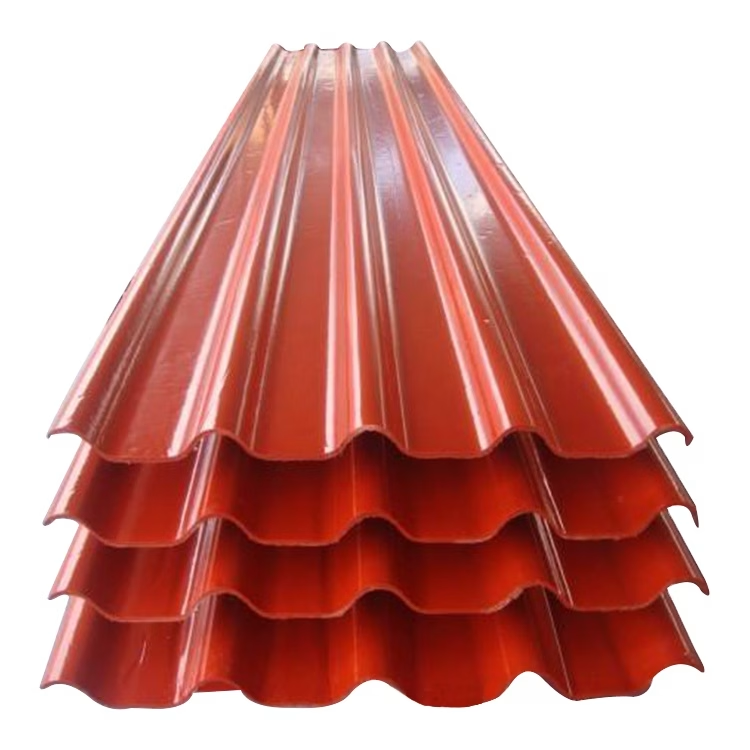
| Corrugated (7.5–9.5mm rib) | Agricultural, industrial, low-cost housing | Most forgiving profile; works with 0.30–0.50mm |
| Trapezoidal (20–40mm rib) | Commercial, industrial, standard construction | Requires adequate stiffness; 0.40mm minimum |
| Standing Seam (structural) | Architectural, high-end commercial, steep pitch | Thicker material (0.50mm+) for clip engagement |
| Standing Seam (snap-lock) | Architectural, residential | 0.45–0.55mm; requires consistent temper |
Profile-Specific Recommendations
For Corrugated Profiles:
-
Thickness: 0.30–0.45mm (depending on span)
-
Coating: As per environment
-
Note: Corrugated is most tolerant of thinner gauges due to shape stiffness
For Trapezoidal Profiles:
-
Thickness: Minimum 0.40mm for standard spans
-
0.47mm recommended for commercial quality
-
0.55mm for heavy-duty or high-wind areas
For Standing Seam Profiles:
-
Thickness: Minimum 0.48mm for clip systems
-
0.55mm recommended for structural standing seam
-
Consistent temper essential for seaming operations
Material Property Requirements:
-
Yield strength should match profile design assumptions
-
Elongation sufficient for profile depth
-
Consistent thickness across width for uniform forming
14. Galvanized Roofing Usage by Region
Understanding regional preferences helps in specification and sourcing decisions.
| Region | Typical Specification | Market Drivers |
|---|---|---|
| Australia | 0.48mm BMT, Z275, AS 1397 | Coastal population, high UV, cyclonic regions |
| New Zealand | 0.40–0.55mm, Z275, NZS 3400 | High rainfall, agricultural, marine exposure |
| Middle East (GCC) | 0.40mm, Z180, EN 10346 | Hot arid, but coastal areas require Z275 |
| Southeast Asia | 0.35–0.45mm, Z120–Z180, JIS G3302 | Tropical, high humidity, cost-sensitive |
| Europe (Northern) | 0.50mm, Z275, EN 10346 | Industrial, coastal, long design life |
| Europe (Southern) | 0.45–0.50mm, Z180–Z275, EN 10346 | Mediterranean coastal, tourism infrastructure |
| North America | 26–24 gauge, G60–G90, ASTM A653 | Regional codes, hurricane areas require heavier |
| Africa (East/West) | 0.30–0.40mm, Z120, Various standards | Cost-driven, but coastal areas need Z275 |
| South Africa | 0.40–0.50mm, Z200–Z275, SANS 4992 | Mixed climate, strong mining/industrial sector |
| South America | 0.40–0.50mm, Z180–Z275, Various | Regional standards, coastal requirements vary |
Key Observations by Region
-
Australia and New Zealand have among the most stringent requirements due to coastal populations and high UV exposure
-
Middle East projects often specify European standards (EN) even when located in Asia/Africa
-
Southeast Asia remains cost-sensitive but coastal tourism drives Z275 specifications
-
Africa varies widely—South Africa has sophisticated standards; other regions may accept JIS or GB standards
-
Europe increasingly mandates CE marking and EN standards for construction products
15. Real-World Applications
Scenario 1: Standard Industrial Warehouse, Inland Location
Context: A 10,000m² warehouse in central Germany, 200km from coast, moderate industrial atmosphere, 5° roof pitch, purlin spacing 1.5m.
Selection decisions:
-
Thickness: 0.47mm selected for adequate stiffness over 1.5m spans, resistance to oil-canning
-
Coating: Z180 chosen for 25+ year target life, moderate industrial exposure
-
Treatment: Chromate passivation specified for 3-month construction timeline
-
Profile: Trapezoidal 35mm high rib for structural efficiency
Technical observation: The 0.47mm thickness provides adequate section modulus with the 35mm profile depth. Z180 offers safety margin above Z120 minimum, accounting for industrial SO₂ exposure. Passivation critical as roof sheets stored onsite for 6 weeks during framing.
Scenario 2: Coastal Commercial Building, Tropical Climate
Context: A retail complex in Queensland, Australia, 800m from ocean, high humidity, cyclonic wind region, 10° roof pitch.
Selection decisions:
-
Thickness: 0.55mm specified due to cyclonic wind requirements (building code minimum for wind region)
-
Coating: Z275 minimum mandated by coastal location
-
Surface: Double-sided passivation essential for humid transport and storage
-
Additional protection: Specified wash-down after installation to remove any salt residue from construction period
Technical observation: The combination of 0.55mm thickness and Z275 coating meets both structural (wind loading) and durability (salt exposure) requirements. Fasteners specified with matching heavy coating and sealing washers to prevent galvanic corrosion at penetrations.
Scenario 3: Agricultural Shed, Livestock Housing
Context: Dairy barn in New Zealand, 50km from coast but with ammonia exposure from animals, high rainfall, 15° roof pitch.
Selection challenges: Ammonia from livestock accelerates zinc corrosion beyond normal rates. High rainfall increases time-of-wetness.
Selection decisions:
-
Thickness: 0.40mm adequate for 1.2m purlin spacing
-
Coating: Z275 selected despite inland location due to ammonia exposure
-
Profile: Deep-rib design (40mm) improves ventilation under sheets, reducing condensation
-
Treatment: Passivation standard
Technical observation: Agricultural environments are frequently underestimated. Ammonia forms ammonium hydroxide in moisture, which attacks zinc at rates comparable to mild industrial pollution. Z275 provides 10–15 years in this environment versus 5–8 years for Z120.
16. How to Choose the Right Galvanized Steel for Your Roof
Step-by-Step Decision Framework
Step 1: Assess Environmental Exposure
| Factor | Assessment Question | Data Needed |
|---|---|---|
| Distance from coast | <1km, 1–10km, >10km? | Map measurement |
| Industrial proximity | Within 5km of plant? | Local knowledge |
| Annual rainfall | <500mm, 500–1000mm, >1000mm? | Climate data |
| Building use | Normal, agricultural, industrial? | Project scope |
| Roof pitch | Low (<5°), medium, steep (>15°)? | Design drawings |
Step 2: Determine Required Coating Weight
Based on exposure score:
| Exposure Score | Minimum Coating | Recommended Coating |
|---|---|---|
| Mild (inland, dry, non-industrial) | Z120 | Z180 |
| Moderate (urban, some industry) | Z180 | Z180 |
| Severe (coastal, industrial, agricultural) | Z275 | Z275 |
| Extreme (direct marine, heavy chemical) | Z275 + paint | Consider Galvalume/Aluminum |
Step 3: Calculate Structural Requirements
| Roof Span (purlin spacing) | Minimum Thickness (standard profiles) |
|---|---|
| <1.0m | 0.35mm |
| 1.0–1.2m | 0.40mm |
| 1.2–1.5m | 0.45–0.47mm |
| 1.5–1.8m | 0.50–0.55mm |
| >1.8m | 0.60mm or structural analysis required |
Step 4: Select Surface Treatment
| Condition | Treatment Required |
|---|---|
| Immediate installation, dry climate | Optional (untreated acceptable) |
| Storage >2 weeks or humid climate | Passivation required |
| Painting planned | Chromate or phosphate treatment |
| Tropical shipment | Passivation mandatory |
Step 5: Verify Standards Compliance
Check local building codes for:
-
Minimum thickness requirements (often mandated)
-
Minimum coating weights for specific exposures
-
Fire safety ratings (some profiles require specific thickness)
-
Wind load certifications (profile and thickness combinations)
Step 6: Use Supplier Checklist
Before placing order, verify:
-
Mill Test Certificate availability
-
Coating weight verification method
-
Third-party inspection options
-
Export packaging standards
Common Mistakes to Avoid
Mistake 1: Specifying by Gauge Number Only
Gauge numbers vary by standard. “26 gauge” can mean 0.45mm (US) or 0.40mm (elsewhere). Always specify in millimeters.
Mistake 2: Ignoring Storage Conditions
Even correctly specified material fails if stored improperly. Plan for covered, ventilated storage from delivery to installation.
Mistake 3: Matching Coating to Substrate Only
Roof life depends on coating weight, fastener selection, flashing details, and maintenance. A Z275 roof with cheap fasteners fails at the fasteners first.
Mistake 4: Assuming “One Grade Fits All”
A shopping center roof in Dubai (hot, dry, inland) needs different specifications than the same building in Miami (hot, humid, coastal). Climate drives selection.
Mistake 5: Overlooking Profile Compatibility
Some roofing profiles require minimum thicknesses to maintain shape during roll-forming. Check profile manufacturer recommendations.
Mistake 6: Skipping the Mill Test Certificate
Verbal assurances mean nothing. Always obtain and verify MTC before accepting delivery.
17. Frequently Asked Questions
Q: What is the minimum coating weight for a standard residential roof?
A: For residential roofs in typical suburban environments, Z120 (120 g/m² total both sides) is the minimum acceptable coating weight. This provides approximately 15–20 years of service life before significant corrosion appears. Most building codes and roofing warranties require Z120 minimum, with many specifying Z180 for improved longevity. For coastal residences within 5km of ocean, increase to Z275.
Q: Can I use 0.30mm galvanized steel for roofing?
A: Yes, but only in specific applications. 0.30mm thickness is suitable for temporary structures, agricultural sheds with close purlin spacing (<0.8m), and low-cost housing in non-cyclonic areas. It is not adequate for permanent commercial buildings, areas with snow load, or where maintenance access is required. The material will oil-can (show visible waviness) and may be damaged during installation. For standard permanent construction, 0.40mm is the practical minimum.
Q: How do I convert between G90 and Z275?
A: G90 (ASTM designation) and Z275 (metric/EN designation) represent approximately the same coating weight. G90 means 0.90 oz/ft² total both sides, which converts to approximately 275 g/m² (0.90 oz × 304.8 g/oz × 10.76 ft²/m² = 275 g/m²). In practice, they are considered equivalent for specification purposes, though exact testing methods differ slightly between standards.
Q: Does color affect roofing material selection?
A: Yes, in two ways. First, if you need a colored roof, you must specify PPGI (pre-painted galvanized steel) rather than bare galvanized. Second, color affects roof temperature—darker colors absorb more heat, potentially accelerating coating degradation in hot climates. For dark colors in high-temperature regions, consider increasing coating weight by one level or specifying higher-grade paint systems (PVDF rather than polyester).
Q: What is the difference between passivated and oiled galvanized steel?
A: Passivation applies a thin chemical layer that reacts with the zinc to form a protective film, preventing white rust during storage and transport. The film remains on the surface permanently and does not require removal. Oiling applies a temporary oil film that must be removed (degreased) before painting or if the roof will be left exposed. Oiled steel attracts dust and may develop white rust if the oil film breaks down. For most roofing applications, passivation is preferred.
Q: How does roof pitch affect galvanized steel selection?
A: Low-pitch roofs (<5°) drain slowly, keeping the surface wet longer after rain. This increased time-of-wetness accelerates corrosion. For low-pitch roofs, increase coating weight by one level (e.g., from Z120 to Z180, or Z180 to Z275). Also ensure profile design includes adequate capillary breaks to prevent water migration under sheets.
Q: Can I mix different coating weights on the same roof?
A: Technically yes, but practically no. Mixing Z120 flashings with Z275 main roofing creates a situation where the flashings will corrode faster than the main roof, leading to premature failure at critical junctions. Always match or exceed the main roof specification for flashings, ridge caps, and accessories.
Q: What fasteners should I use with galvanized roofing?
A: Fasteners must be compatible with galvanized steel to prevent galvanic corrosion. Use galvanized or stainless steel fasteners with EPDM sealing washers. The fastener coating should match or exceed the roof coating weight. Never use untreated carbon steel fasteners—they will rust rapidly, staining the roof and eventually failing structurally. For coastal areas, specify stainless steel fasteners regardless of roof coating.
Q: How do I calculate the total zinc coating I need?
A: The relationship is: coating weight (g/m²) × 0.14 = approximate per-side thickness in microns. For Z120: 120 × 0.14 = 17 microns per side. For Z275: 275 × 0.14 = 38 microns total both sides; per side is 19 microns. Corrosion rates vary by environment from 0.5–3 microns per year. Divide per-side thickness by expected corrosion rate for approximate years to zinc depletion.
Q: What documents should I request from my supplier?
A: Always request: 1) Mill Test Certificate (MTC) showing chemical composition and mechanical properties, 2) Coating weight verification report, 3) Packing list, 4) Commercial invoice, 5) Bill of lading. For critical projects, consider third-party inspection reports from SGS, BV, or similar.
Q: How long will galvanized steel roofing last?
A: Depending on coating weight and environment: Z120: 15–25 years; Z180: 20–30 years; Z275: 25–40+ years. Proper installation, appropriate fasteners, and annual cleaning in harsh environments extend service life.
18. Conclusion
Selecting the right galvanized steel coil for roofing requires balancing three fundamental factors: thickness for structural performance, coating weight for corrosion resistance, and surface treatment for handling and installation conditions. The correct specification depends on environmental exposure, roof design, project budget, and expected service life.
The critical rule: Never reduce coating weight to save initial costs in aggressive environments. The small upfront saving leads to premature failure and replacement costs 3–5 times higher than the original investment.
For standard applications, Z120–Z180 coating weight with 0.40–0.47mm thickness serves most projects well. For coastal, industrial, or agricultural environments, step up to Z275. For colored roofs, specify PPGI with appropriate base coating. For extreme conditions, consider Galvalume or aluminum alternatives.
Always verify supplier documentation—mill test certificates, coating weight reports, and third-party inspections provide the only reliable proof that your material meets specifications.
When in doubt, consult with your supplier’s technical team and provide full information about your project location, roof design, and performance expectations. The right material specified correctly will provide decades of reliable service.
Connect with Zhongtang Metal
Need assistance selecting galvanized steel for your roofing project? Our technical team has extensive experience with projects worldwide and can provide guidance based on your specific requirements.
Zhongtang Metal Manufacturing Co., Ltd.
Official Manufacturer • Direct Export • Quality Assured
🌐 Website: https://zhongtangmetal.com/
📧 Technical Inquiries: Via official website contact form
📄 Product Specifications: Galvanized Steel Coil
📋 Request a Quote: Contact Page
Explore Related Resources: