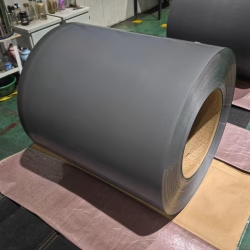
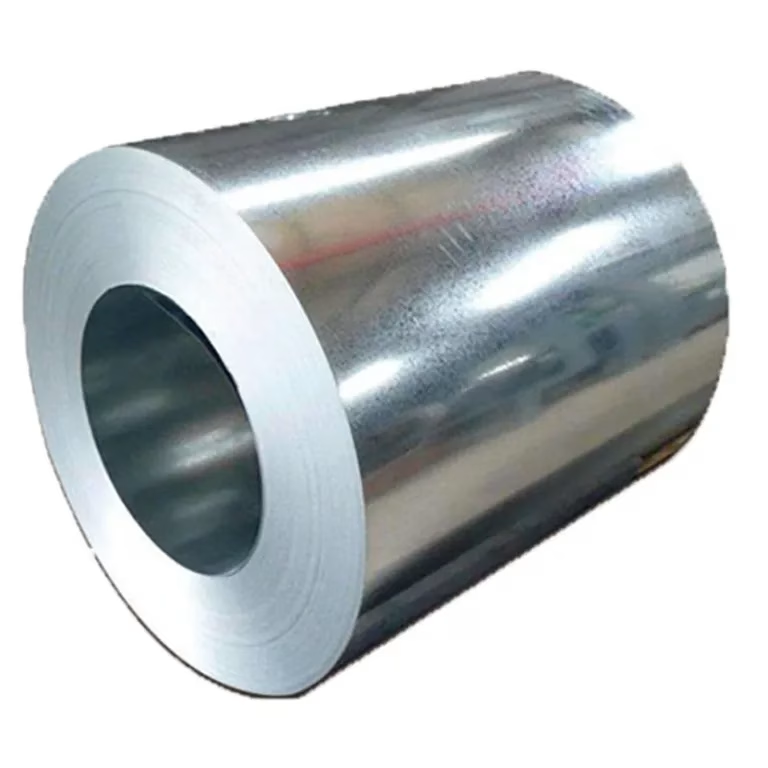
How to Select the Correct Gauge for Your Application
1. Quick Answer
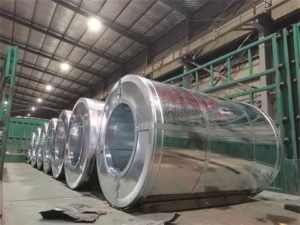
Galvanized steel coil thickness ranges from 0.12mm to 3.0mm, with specific thicknesses suited to different applications: 0.12–0.30mm for lightweight ceiling panels and ductwork, 0.30–0.60mm for roofing and cladding, 0.60–1.2mm for structural panels and roll-formed sections, and 1.2–3.0mm for heavy fabrication, automotive components, and load-bearing structures. Thickness selection directly impacts structural capacity, formability, and cost. Tolerances follow international standards such as ASTM A653 or EN 10346, typically within ±5–10% of nominal thickness.
2. Key Takeaways
- Thickness determines application suitability—thinner gauges (0.12–0.30mm) are used for non-structural applications like ceiling panels, while thicker material (1.2–3.0mm) supports heavy structural loads.
- Roofing applications typically require 0.30–0.60mm, with the exact thickness determined by purlin spacing, wind loads, and building codes.
- Tolerances matter as much as nominal thickness—ASTM A653 and EN 10346 specify allowable variations that affect fit-up in roll-forming and fabrication.
- Formability decreases as thickness increases—thicker material requires more powerful equipment and may have tighter bend radius limitations.
- Cost scales with thickness—heavier gauges consume more steel and increase both material cost and shipping weight.
- Always verify actual thickness with a micrometer—nominal thickness can vary within tolerance, and verification prevents fitment issues in fabrication.
3. Terminology Snapshot
- Base Metal Thickness — Thickness of steel substrate before zinc coating; excludes coating thickness.
- Nominal Thickness — Specified thickness (e.g., 0.45mm) that material is ordered to; actual thickness may vary within tolerance.
- Tolerance — Allowable variation from nominal thickness, typically expressed as ±X mm or as a percentage.
- Gauge Number — Traditional thickness designation (e.g., 26 gauge) that varies by standard; not recommended for precise specification.
- Micrometer — Precision measuring tool used to verify actual thickness.
- Oil-Canning — Visible waviness in light-gauge material, more common in thinner sheets with insufficient stiffness.
4. Understanding the User Problem
Professionals searching for galvanized steel coil thickness information typically face one of several practical challenges:
The Specification Problem: A buyer knows they need galvanized steel for a specific application—roofing, ductwork, structural framing—but doesn’t know what thickness to specify. Incorrect thickness leads to structural failure (too thin) or wasted money (too thick).
The Substitution Problem: A fabricator has drawings specifying a thickness, but the local supplier offers a different gauge. Can they substitute? What are the implications?
The Tolerance Problem: Material arrives, but when measured, it’s slightly thinner than ordered. Is this acceptable? When does it become a problem?
The Cost Optimization Problem: A project has budget constraints. Can a slightly thinner gauge work if other design adjustments are made?
The Forming Problem: A manufacturer needs to bend galvanized steel to tight radii. How does thickness affect bendability?
These questions all center on understanding the relationship between thickness, performance, and application requirements.
5. Why Thickness Matters in Galvanized Steel
Thickness is the primary determinant of structural performance in galvanized steel applications. The relationship follows fundamental engineering principles:
Structural Capacity
For a given steel grade, load-bearing capacity increases with the cube of thickness. Doubling thickness increases stiffness by approximately 8 times. This exponential relationship means small thickness increases yield significant structural gains.
Example: A 0.50mm roof sheet is approximately twice as stiff as 0.40mm material of the same profile, allowing wider purlin spacing or higher load capacity.
Formability
Thicker steel requires more force to bend and may have larger minimum bend radii. For severe forming operations, thinner material is often preferred, provided structural requirements are met.
Weight and Cost
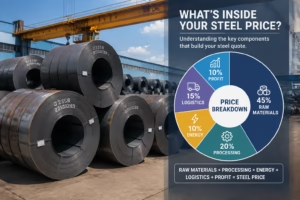
Steel weight is directly proportional to thickness. A 1.0mm coil weighs approximately twice as much as 0.5mm coil of the same dimensions. Since steel is sold by weight, thickness directly affects material cost and shipping expenses.
Coating Relationship
The zinc coating thickness is independent of base metal thickness. A 0.30mm coil can have the same Z275 coating as a 2.0mm coil. However, the coating’s contribution to total thickness (approximately 20–40 microns) is negligible for structural calculations.
6. Complete Thickness Range: 0.12mm to 3.0mm
Understanding the Range
| Thickness Category | Range | Primary Applications |
|---|---|---|
| Ultra-Light Gauge | 0.12–0.30mm | Ceiling panels, light ductwork, decorative trim, small appliances |
| Light Gauge | 0.30–0.60mm | Roofing, wall cladding, gutters, downspouts, roll-formed sections |
| Medium Gauge | 0.60–1.2mm | Structural panels, purlins, girts, automotive body parts, electrical enclosures |
| Heavy Gauge | 1.2–2.0mm | Load-bearing structures, heavy equipment housings, truck bodies |
| Ultra-Heavy Gauge | 2.0–3.0mm | Industrial fabrication, bridge components, mining equipment, pressure vessels |
Thickness by Application
| Application | Typical Thickness Range | Key Considerations |
|---|---|---|
| Ceiling Panels | 0.12–0.25mm | Lightweight, easy to handle, requires support framing |
| Ductwork (HVAC) | 0.30–0.60mm | SMACNA standards specify thickness by duct size and pressure class |
| Residential Roofing | 0.35–0.45mm | Building codes often specify minimum; lighter for low-cost housing |
| Commercial Roofing | 0.45–0.55mm | Longer spans, higher wind loads, better oil-canning resistance |
| Industrial Roofing | 0.50–0.60mm | Heavy-duty profiles, wide purlin spacing, foot traffic considerations |
| Wall Cladding | 0.40–0.50mm | Vertical installation reduces stiffness requirements versus roofing |
| Roll-Formed Sections | 0.50–1.2mm | Purlin, girt, and framing sections require structural thickness |
| Automotive Panels | 0.60–0.80mm | Formability critical; deep drawing grades required |
| Electrical Enclosures | 0.80–1.2mm | Rigidity for component mounting; grounding considerations |
| Storage Racks | 1.2–2.0mm | Uprights and beams require structural thickness |
| Truck Bodies | 1.5–2.5mm | Abrasion resistance, impact strength, weldability |
| Heavy Fabrication | 2.0–3.0mm | Mining, construction equipment, industrial machinery |
7. Application by Thickness: Detailed Guide
0.12–0.30mm: Ultra-Light Gauge
Typical Applications:
- Suspended ceiling grids and panels
- Lightweight ductwork (low-pressure HVAC)
- Decorative trim and moldings
- Small appliance components
- Packaging and strapping
- Light electrical boxes
Performance Characteristics:
- Very easy to cut and form
- Requires close support spacing
- Prone to oil-canning if not properly tensioned
- Limited load-bearing capacity
- Economical for non-structural uses
Selection Considerations:
- Not suitable for exterior exposure without full support
- May require backing or reinforcement for flatness
- Ideal for applications where weight minimization is critical
- Forming can be done with hand tools
See our Galvanized Steel Coil product page for availability in light gauges.
0.30–0.60mm: Light Gauge (Roofing and Cladding Range)
Typical Applications:
- Residential and commercial roofing
- Wall cladding and siding
- Gutters, downspouts, and flashings
- Roll-formed roofing profiles
- Agricultural building envelopes
- General sheet metal work
Performance Characteristics:
- Good balance of strength and formability
- Standard for most profiled roofing systems
- Adequate stiffness for spans up to 1.5m (depending on profile)
- Resists oil-canning in properly designed profiles
- Readily available in all coating weights
Thickness Selection Within This Range:
| Thickness | Typical Use | Purlin Spacing (Typical) |
|---|---|---|
| 0.30–0.35mm | Budget roofing, agricultural sheds | 0.8–1.0m |
| 0.40–0.45mm | Standard residential/commercial | 1.2–1.5m |
| 0.47–0.50mm | Premium roofing, high-wind areas | 1.5–1.8m |
| 0.55–0.60mm | Heavy industrial, walkable roofs | 1.8–2.0m |
Selection Considerations:
- Building codes often specify minimum thickness for roofing
- Profile depth affects stiffness—deeper profiles can use thinner material
- Wind uplift calculations may require thicker material
- Snow load regions require thickness verification
For roofing-specific guidance, see our How to Choose Galvanized Steel for Roofing guide.
0.60–1.2mm: Medium Gauge (Structural Range)
Typical Applications:
- Structural purlins and girts (C and Z sections)
- Automotive body panels and components
- Electrical enclosures and cabinets
- Storage rack components
- Framing systems
- Agricultural equipment
- Truck trailer panels
Performance Characteristics:
- Significant structural capacity
- Requires powered roll-forming or press braking
- Good rigidity for load-bearing applications
- Welding becomes more common at this thickness
- Suitable for exposed structural applications
Thickness Selection Within This Range:
| Thickness | Application Examples |
|---|---|
| 0.60–0.80mm | Automotive interior panels, light structural sections |
| 0.80–1.0mm | Electrical enclosures, rack shelving, light framing |
| 1.0–1.2mm | Heavy equipment housings, structural framing, trailer walls |
Selection Considerations:
- Forming equipment must have adequate capacity
- Bend radii increase with thickness
- Welding parameters differ from light gauge
- Edge conditioning important for safety and fit
1.2–3.0mm: Heavy Gauge (Industrial Range)
Typical Applications:
- Heavy industrial fabrication
- Mining and earthmoving equipment
- Bridge components and infrastructure
- Pressure vessels and tanks
- Shipbuilding and marine structures
- Heavy truck and trailer frames
- Structural columns and beams
Performance Characteristics:
- Maximum structural capacity
- Requires heavy fabrication equipment
- Welding is primary joining method
- Limited formability; typically pressed or rolled
- May require preheating for severe forming
Thickness Selection Within This Range:
| Thickness | Application Examples |
|---|---|
| 1.2–1.5mm | Heavy equipment guards, industrial bins |
| 1.5–2.0mm | Truck frames, mining chutes, structural supports |
| 2.0–2.5mm | Bridge components, heavy machinery bases |
| 2.5–3.0mm | Pressure vessels, specialized industrial equipment |
Selection Considerations:
- Material handling requires mechanical assistance
- Cutting requires plasma, laser, or heavy shears
- Welding procedures must be qualified
- Coating performance same as lighter gauges
- Edge preparation important for safety
8. Thickness Tolerances: What You Need to Know
Why Tolerances Matter
Galvanized steel is produced to nominal thickness specifications, but actual thickness varies within allowable ranges defined by international standards. Understanding these tolerances prevents:
- Fit-up problems when material is consistently at tolerance extremes
- Strength shortfalls if material runs consistently thin
- Rejection disputes when measured thickness differs from ordered
- Weight discrepancies affecting freight and costing
Tolerance Standards by Region
| Standard | Region | Typical Tolerance (0.30–0.60mm range) |
|---|---|---|
| ASTM A653 | North America | ±0.05mm typical for light gauge |
| EN 10346 | Europe, Middle East, Australia | ±0.04–0.06mm depending on width |
| JIS G3302 | Japan, Asia | ±0.05mm typical |
| GB/T 2518 | China | Similar to EN 10346 |
How Tolerance Works in Practice
For a 0.45mm coil ordered to EN 10346:
- Nominal thickness: 0.45mm
- Allowable range: 0.41mm to 0.49mm (typical)
- Actual delivered: Could be anywhere within this range
The critical point: The supplier controls the rolling process but cannot guarantee every point measures exactly 0.45mm. The coil may average 0.45mm but have variations across width and length.
What Affects Tolerance
- Mill capabilities — Modern mills hold tighter tolerances
- Width — Wider coils typically have wider tolerances
- Thickness — Thinner material has tighter absolute tolerances but wider percentage variation
- Grade — Some grades allow wider tolerances
Practical Implications
| Situation | Impact |
|---|---|
| Roll-forming | Consistent thickness across width critical; variations cause twist |
| Press braking | Thicker-than-nominal may exceed press capacity |
| Weight calculation | Thinner-than-nominal reduces actual delivered weight |
| Structural design | Designs using minimum thickness are safer than those using nominal |
| Coating weight | Independent of base thickness; unaffected |
How to Manage Tolerances
- Specify tolerance requirements if your application is sensitive
- Order to minimum thickness rather than nominal for critical structural applications
- Verify with micrometer upon receipt—measure at edge and center
- Discuss with supplier—reputable mills can provide typical distribution data
- Allow for tolerance in designs—don’t assume exact nominal
9. Thickness vs. Gauge Numbers: Avoiding Confusion
The Gauge Number Problem
Many specifications still use gauge numbers (16 gauge, 18 gauge, 26 gauge), but these are not standardized internationally. A “26 gauge” sheet can mean different thicknesses depending on the standard and country.
Common Gauge Systems
| Gauge | US Standard Gauge (Steel) | Birmingham Gauge | Manufacturer’s Standard Gauge |
|---|---|---|---|
| 16 | 1.59mm | 1.65mm | 1.59mm |
| 18 | 1.27mm | 1.42mm | 1.27mm |
| 20 | 0.95mm | 1.02mm | 0.95mm |
| 22 | 0.79mm | 0.81mm | 0.79mm |
| 24 | 0.64mm | 0.61mm | 0.64mm |
| 26 | 0.53mm | 0.51mm | 0.53mm |
| 28 | 0.41mm | 0.40mm | 0.41mm |
| 30 | 0.33mm | 0.32mm | 0.33mm |
Critical observation: The differences, while small, can affect fit in precision applications.
Best Practice
Always specify thickness in millimeters (or inches with decimal). Never rely on gauge numbers alone. If a drawing shows “26 gauge,” confirm the intended thickness in millimeters before ordering.
Example specification:
“Galvanized steel coil, 0.45mm base metal thickness (equivalent to 26 gauge US Standard), ASTM A653 G90”
10. Thickness and Coating Weight: Independent but Related
Independence
Base metal thickness and zinc coating weight are independent specifications. You can order:
- 0.30mm with Z275 (thin steel, heavy coating)
- 2.0mm with Z80 (thick steel, light coating)
- Any combination in between
Why This Matters
| Combination | Application |
|---|---|
| Thin steel + heavy coating | Coastal roofing where corrosion risk high but structural loads moderate |
| Thick steel + light coating | Indoor structural applications with minimal corrosion risk |
| Thick steel + heavy coating | Marine structures requiring both strength and corrosion resistance |
Coating Contribution to Total Thickness
The zinc coating adds measurable but structurally negligible thickness:
| Coating Weight | Approximate Total Thickness Added (Both Sides) |
|---|---|
| Z80 | ~12 microns (0.012mm) |
| Z120 | ~17 microns (0.017mm) |
| Z180 | ~25 microns (0.025mm) |
| Z275 | ~38 microns (0.038mm) |
| Z350 | ~49 microns (0.049mm) |
Practical implication: For structural calculations, ignore coating thickness. For fit-up in precision assemblies, consider whether coating thickness affects clearances.
**For detailed coating weight information, see What Does Z275 Mean in Galvanized Steel? **
11. Thickness and Formability
The Bend Radius Relationship
As thickness increases, the minimum recommended bend radius typically increases:
| Thickness Range | Typical Minimum Bend Radius (90° bend) |
|---|---|
| 0.12–0.30mm | 0.5× thickness (can fold flat) |
| 0.30–0.60mm | 0.5–1.0× thickness |
| 0.60–1.2mm | 1.0–1.5× thickness |
| 1.2–2.0mm | 1.5–2.0× thickness |
| 2.0–3.0mm | 2.0–3.0× thickness |
Why Thickness Affects Formability
- Material displacement — Thicker material requires more force to move
- Tensile strain — Outer surface stretches more in thick material for same radius
- Springback — Increases with thickness, requiring overbending compensation
- Tooling loads — Heavier presses and dies required
Forming Considerations by Thickness
| Thickness | Forming Method | Considerations |
|---|---|---|
| 0.12–0.30mm | Hand tools, light press | Easy to form; risk of buckling |
| 0.30–0.60mm | Light press brake, roll-form | Standard forming; good results |
| 0.60–1.2mm | Press brake, roll-form | Requires power equipment |
| 1.2–2.0mm | Heavy press brake | May need special tooling |
| 2.0–3.0mm | Hydraulic press, rolling | Limited cold forming; consider hot forming |
12. Thickness Selection by International Standard
Different regions and standards reference thickness differently. Understanding these variations helps in global sourcing.
ASTM A653 (North America)
- Thickness specified in inches or millimeters
- Common roofing thicknesses: 0.018–0.028″ (0.46–0.71mm)
- Gauge numbers still commonly used but being replaced by decimals
- Tolerances specified in ASTM A568/A568M
EN 10346 (Europe, Middle East, Australia)
- Thickness always specified in millimeters
- Common roofing: 0.40–0.60mm
- Tolerances by class: Normal or Special
- Designation includes thickness after coating if relevant
JIS G3302 (Japan, Asia)
- Thickness in millimeters
- Common: 0.27–0.60mm for general use
- Tolerances per JIS G3302 tables
GB/T 2518 (China)
- Thickness in millimeters
- Aligned with ISO standards
- Widely used in Belt and Road projects
13. How to Verify Thickness Upon Receipt
Tools Needed
- Micrometer (digital preferred) with 0.001mm resolution
- Calibration standard to verify tool accuracy
- Clean cloth to remove oil and debris
Measurement Procedure
- Clean the surface — Remove oil, dirt, and loose particles
- Zero the micrometer — Verify calibration
- Measure at edge — 20–50mm from edge (avoid shear burr)
- Measure at center — Mid-width of coil or sheet
- Measure multiple points — At least 3 locations
- Record readings — Note minimum, maximum, average
Interpreting Results
| Finding | Interpretation | Action |
|---|---|---|
| Within tolerance | Acceptable | Proceed with use |
| Below minimum | Out of specification | Contact supplier |
| Above maximum | Out of specification | Check if acceptable for application |
| Inconsistent | Poor mill control | Discuss with supplier |
Important Note
Coating thickness is included in micrometer measurements. For base metal thickness, you need either:
- Supplier’s certified base metal thickness
- Microscopic measurement of cross-section
- Chemical stripping to remove coating (destructive)
14. Cost Implications of Thickness Selection
Material Cost Relationship
Steel is sold by weight. Thicker material weighs more per square meter.
| Thickness | Weight per m² (steel only)* | Relative Cost (per m²) |
|---|---|---|
| 0.30mm | 2.36 kg | 0.5× baseline |
| 0.40mm | 3.14 kg | 0.67× baseline |
| 0.45mm | 3.53 kg | 0.75× baseline |
| 0.50mm | 3.93 kg | 0.83× baseline |
| 0.55mm | 4.32 kg | 0.92× baseline |
| 0.60mm | 4.71 kg | 1.0× baseline |
| 0.80mm | 6.28 kg | 1.33× baseline |
| 1.0mm | 7.85 kg | 1.67× baseline |
| 1.2mm | 9.42 kg | 2.0× baseline |
| 1.5mm | 11.78 kg | 2.5× baseline |
| 2.0mm | 15.70 kg | 3.33× baseline |
*Steel density: 7,850 kg/m³. Coating adds negligible weight.
Shipping Cost Impact
Heavier coils cost more to ship:
- Container weight limits may restrict how many tons per container
- Air freight impractical for heavy gauges
- Project logistics must account for total weight
Value Engineering
Consider whether thicker material is truly necessary:
- Can profile design compensate for thinner material?
- Does the application actually require the structural capacity?
- Would a higher strength grade allow thinner material?
15. When to Choose Each Thickness Range
Choose 0.12–0.30mm When:
✅ Application is non-structural (ceilings, trim, light ductwork)
✅ Weight minimization is critical
✅ Material will be fully supported
✅ Forming is extensive and requires easy handling
✅ Budget is extremely constrained
✅ Indoor use only with no load requirements
Choose 0.30–0.60mm When:
✅ Roofing or wall cladding is the primary application
✅ Standard purlin spacing (1.2–1.5m) is used
✅ Building codes specify this range
✅ Balance of cost and performance is needed
✅ Roll-forming will be used for profiling
✅ Both structural and forming requirements are moderate
Choose 0.60–1.2mm When:
✅ Structural framing (purlins, girts) is required
✅ Load-bearing capacity is essential
✅ Automotive or equipment applications
✅ Enclosures need rigidity for component mounting
✅ Welding will be primary joining method
✅ Spans exceed 1.5m without intermediate support
Choose 1.2–3.0mm When:
✅ Heavy industrial fabrication is required
✅ Mining, earthmoving, or heavy equipment applications
✅ Structural columns or load-bearing members
✅ Pressure-containing applications
✅ Maximum strength and durability needed
✅ Weight is not a primary constraint
16. Common Mistakes in Thickness Selection
Mistake 1: Using Gauge Numbers Without Verification
Problem: Assuming “26 gauge” means the same thickness everywhere.
Solution: Always specify in millimeters. Confirm conversions.
Mistake 2: Ignoring Tolerances in Design
Problem: Designing for exact nominal thickness, then receiving material at tolerance extreme that doesn’t fit.
Solution: Design for minimum thickness, or specify tighter tolerances if critical.
Mistake 3: Overspecifying “Just to Be Safe”
Problem: Specifying 0.60mm when 0.45mm would work, adding 30% unnecessary cost.
Solution: Calculate actual requirements; consult structural engineer.
Mistake 4: Underspecifying for Coastal Environments
Problem: Using 0.30mm in marine area because it’s “just roofing.”
Solution: Coastal environments need both adequate thickness for wind loads AND heavy coating.
Mistake 5: Forgetting That Coating Is Separate
Problem: Assuming thicker steel automatically means better corrosion resistance.
Solution: Specify coating weight independently based on environment.
Mistake 6: Not Verifying Received Thickness
Problem: Accepting material without measuring, then discovering fitment issues during fabrication.
Solution: Always measure samples upon receipt.
17. Frequently Asked Questions
Q: What is the most common thickness for galvanized steel roofing?
A: For standard commercial and industrial roofing, 0.45–0.47mm is most common. This thickness provides adequate stiffness for 1.2–1.5m purlin spacing, resists oil-canning, and meets most building code requirements. Residential roofing often uses 0.40–0.45mm, while heavy industrial applications may require 0.55–0.60mm.
Q: Can I use 0.30mm galvanized steel for roofing?
A: Yes, but only in specific situations: closely spaced purlins (<1.0m), low wind loads, non-cyclonic areas, and budget-constrained projects. It is not recommended for permanent structures in exposed locations. 0.30mm material will oil-can (show visible waviness) more readily and has lower resistance to foot traffic damage.
Q: How do I convert gauge to millimeters?
A: There is no universal conversion. For US Standard Gauge (steel sheet):
- 26 gauge = 0.53mm (0.0209″)
- 24 gauge = 0.64mm (0.0252″)
- 22 gauge = 0.79mm (0.0312″)
- 20 gauge = 0.95mm (0.0375″)
Always verify with your supplier which gauge standard applies.
Q: Does the zinc coating add significant thickness?
A: No. Even the heaviest common coating (Z275) adds only approximately 0.038mm total (both sides). For structural calculations, coating thickness is negligible. For precision fit-up, consider whether coating affects clearances.
Q: What thickness do I need for standing seam roofing?
A: Standing seam roofs typically require 0.48–0.55mm for structural (clip-fixed) systems, and 0.45–0.50mm for snap-lock systems. The exact requirement depends on panel width, clip spacing, and wind load calculations. Always verify with the profile manufacturer.
Q: Can I get galvanized steel thicker than 3.0mm?
A: Yes, but not as coil. Thicker material is produced as sheet or plate, typically hot-rolled and then galvanized. This guide focuses on coil products, which are generally limited to 3.0mm maximum for practical handling and processing.
Q: How does thickness affect welding?
A: Thicker material requires higher amperage, may need edge preparation, and has different joint design requirements. For thicknesses above 1.2mm, proper welding procedures should be qualified. Below 0.60mm, welding becomes difficult due to burn-through risk—mechanical fastening or adhesives may be preferred.
Q: What is the tolerance for 0.45mm galvanized steel?
A: Typical tolerance per EN 10346 is ±0.04–0.05mm for this thickness range. ASTM A653 allows approximately ±0.05mm. Actual tolerance depends on mill capability and width. For critical applications, specify “special tolerance” if available.
Q: Is thicker always better for durability?
A: Not for corrosion resistance—coating weight matters more. For structural durability, thickness matters. A 0.60mm sheet with Z120 coating may outlast a 0.40mm sheet with Z275 in terms of structural life, but the thinner sheet with heavier coating may resist corrosion longer. Match both properties to requirements.
Q: How do I specify thickness correctly?
A: Write: “Galvanized steel coil, base metal thickness 0.45mm (excluding coating), to EN 10346 DX51D+Z275.” This specifies both thickness and coating clearly, with the standard referenced.
18. Conclusion
Selecting the correct galvanized steel coil thickness is a balance of structural requirements, formability needs, and cost constraints. The full range from 0.12mm to 3.0mm serves applications from lightweight ceiling panels to heavy industrial fabrication.
Key principles to remember:
- Match thickness to application—use the thinnest material that safely meets structural requirements
- Verify with standards—specify in millimeters, not gauge numbers
- Account for tolerances—design for minimum, not nominal
- Remember coating is separate—thickness doesn’t determine corrosion resistance
- Measure upon receipt—verification prevents fabrication problems
For most roofing and cladding applications, 0.40–0.55mm is the practical range. For structural applications, move to 0.60–1.2mm. For heavy industrial, 1.2–3.0mm.
When in doubt, consult your supplier’s technical team with your specific application details—span, loads, environment, and forming requirements. The right thickness specified correctly delivers decades of reliable service.
Connect with Zhongtang Metal
Need assistance selecting the right thickness for your application? Our technical team can help match your requirements to the optimal gauge.
Zhongtang Metal Manufacturing Co., Ltd.
Official Manufacturer • Full Thickness Range • Quality Assured
🌐 Website: https://zhongtangmetal.com/
📧 Technical Inquiries: Via official website contact form
📄 Product Specifications: Galvanized Steel Coil
📋 Request a Quote: Contact Page
Explore Related Resources:
- How to Choose Galvanized Steel for Roofing
- What Does Z275 Mean in Galvanized Steel?
- SGCC vs DX51D Galvanized Steel Explained
- Galvanized Steel vs Galvalume Comparison
Last Updated: March 2026