
Introduction
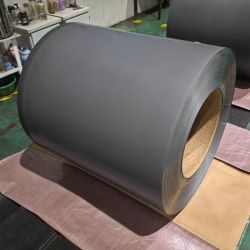
Hot rolled steel coils represent a fundamental industrial material used across global manufacturing and construction sectors. Understanding the international standards governing their production is crucial for engineers, procurement specialists, and fabricators working in today’s interconnected global marketplace. This comprehensive guide explores the major standardization systems for hot rolled steel coils across key industrial regions, providing essential knowledge for proper material selection and specification.
1. American Standards (ASTM & AISI)
ASTM A1011/A1011M
This comprehensive specification covers multiple steel categories in coil form:
-
Carbon steel sheets and strips
-
Structural grades
-
High-strength low-alloy (HSLA) steels
-
HSLA with improved formability
-
Ultra-high strength steels
Application Scope: General industrial applications requiring consistent quality and performance
ASTM A36/A36M
While primarily covering structural shapes, plates, and bars, this standard influences coil specifications for structural applications requiring proven reliability and weldability.
ASTM A568/A568M
Provides general requirements for both hot-rolled and cold-rolled steel sheets, establishing fundamental quality parameters for coil products.
AISI Carbon and Alloy Steel Standards
-
AISI 1006/1008: Low-carbon steels with excellent formability for automotive and appliance applications
-
AISI 1010/1015: Enhanced strength while maintaining good forming characteristics
-
AISI 1020/1045: Medium-carbon steels for machinery and structural components
-
AISI 4130/4140: Alloy steels for high-stress applications requiring superior strength and wear resistance
2. Japanese Standards (JIS)
JIS G3101: General Structure Steels
-
Key Grade: SS400 (equivalent to ASTM A36)
-
Applications: General construction and structural components
-
Features: Balanced strength and weldability
JIS G3131: Mild Steel for Forming and Welding
-
Designed for automotive parts and general fabrication
-
Excellent formability and consistent welding performance
JIS G3113: Automobile Structural Steels
-
Grades: SAPH310, SAPH370, SAPH400, SAPH440
-
Applications: Automotive frames and structural components
-
Features: Controlled mechanical properties for vehicle safety
Specialized JIS Standards
-
JIS G3116: Gas cylinder applications with strict quality requirements
-
JIS G3115: Pressure vessel steels for elevated temperature service
-
JIS G3125: Weather-resistant steels for exposed structures
-
JIS G4051/4053: Machine structural steels with precise chemical compositions
3. British and European Standards (BS EN)
BS EN 10025: Structural Steels
Comprehensive standard covering hot-rolled structural steel products:
-
Grades: S235, S275, S355 with varying strength levels
-
Applications: Building construction, bridges, and general structures
-
Certification: Strict technical delivery conditions
BS EN 10111: Low Carbon Steels for Cold Forming
-
Designed for subsequent cold forming operations
-
Consistent mechanical properties for manufacturing consistency
BS EN 10149: High Yield Strength Steels
-
Grades: S315MC, S355MC, S420MC, S460MC
-
Applications: Automotive safety components, heavy equipment
-
Features: Enhanced strength while maintaining formability
BS EN 10149-2: Premium High-Strength Steels
-
Grades: S500MC, S550MC, S700MC
-
Applications: Weight-sensitive structures and components
-
Features: Superior strength-to-weight ratios
Specialized European Standards
-
BS EN 10120: Steel for welded gas cylinders with stringent safety requirements
-
BS EN 10155: Weathering steels for corrosion resistance in exposed applications
-
BS EN 10208: Steel pipes for critical energy infrastructure
4. Chinese Standards (GB/T)
GB/T 3274-2017
Comprehensive standard covering:
-
Carbon structural steel coils
-
High-strength low-alloy steel products
-
Dimensional tolerances and quality requirements
-
Testing and certification protocols
GB/T 700-2006
Carbon structural steels specification establishing fundamental requirements for:
-
Chemical composition limits
-
Mechanical property ranges
-
Quality assurance procedures
-
Marking and documentation
5. International Standards (ISO)
ISO 3573: Hot-Rolled Carbon Steel Sheet
-
International harmonization of quality requirements
-
Technical specifications for global trade
-
Quality assurance protocols
ISO 6316: Steel Strip for Welded Tubes
-
Specialized requirements for pressure applications
-
Strict quality control for safety-critical applications
-
International acceptance for energy sector projects
6. Global Standardization Trends
Harmonization Efforts
-
Increasing alignment between national standards
-
Mutual recognition of testing and certification
-
Simplified global supply chain management
Performance-Based Specifications
-
Shift from prescriptive composition requirements
-
Emphasis on mechanical performance characteristics
-
Flexibility in manufacturing while maintaining quality
Sustainability Integration
-
Environmental considerations in standard development
-
Energy efficiency requirements
-
Recyclability and circular economy principles
7. Selection Guidelines
North American Projects
-
Primary Standards: ASTM A1011, AISI grades
-
Considerations: Local availability, fabrication requirements
-
Certification: Mill test certificates per ASTM requirements
European and UK Applications
-
Primary Standards: BS EN 10025, BS EN 10149 series
-
Considerations: CE marking, regulatory compliance
-
Documentation: EN 10204 type 3.1/3.2 certificates
Asian Market Requirements
-
Primary Standards: JIS G3101, GB/T 3274
-
Considerations: Local certification requirements
-
Quality Assurance: Third-party inspection protocols
International Projects
-
Primary Standards: ISO specifications
-
Considerations: Project specification requirements
-
Documentation: Internationally recognized certifications
8. Quality Assurance and Compliance
Testing Requirements
-
Chemical analysis verification
-
Mechanical property testing
-
Dimensional accuracy checks
-
Surface quality assessment
Certification Protocols
-
Mill test certificates with full traceability
-
Third-party inspection reports
-
Regular supplier qualification audits
-
Continuous quality monitoring
Global Compliance
-
Understanding regional regulatory requirements
-
Maintaining certification records
-
Supplier qualification management
-
Project-specific compliance verification
Conclusion
The landscape of hot rolled steel coil standards reflects both regional industrial traditions and the ongoing globalization of steel production and trade. While ASTM, JIS, BS EN, and GB/T standards each maintain distinct characteristics, they collectively ensure that hot rolled steel coils meet consistent quality and performance requirements worldwide.
Understanding these international standards enables material specialists to navigate global supply chains effectively, ensure regulatory compliance, and select optimal materials for specific applications. As international trade continues to expand and manufacturing becomes increasingly globalized, this knowledge becomes ever more critical for success in the competitive steel industry.
The continuous evolution of these standards, driven by technological advancements and market demands, ensures that hot rolled steel coils remain reliable, high-performance materials supporting infrastructure and manufacturing across all sectors of the global economy.