
Introduction
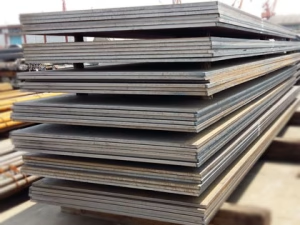
Understanding the dimensional specifications of ordinary medium thick steel plates is crucial for proper material selection in construction, manufacturing, and engineering projects. This guide provides detailed information about the standard sizes and dimensional ranges for these essential structural materials according to major Chinese GB/T standards.
Key Dimension Ranges Overview
The following table summarizes the primary dimensional specifications across major Chinese standards:
| Standard | Thickness Range | Width Range | Length Range |
|---|---|---|---|
| GB/T 700-2006 | 4.5-20 mm | 1,600-3,200 mm | 6,000-18,000 mm |
| GB/T 3274-2017 | 4.5-250 mm | 1,600-6,000 mm | 3,000-27,000 mm |
| GB/T 711-2017 | 6-150 mm | 1,500-4,700 mm | 3,000-18,800 mm |
| GB/T 1591-2018 | 6-160 mm | 900-4,800 mm | 3,000-18,800 mm |
Detailed Standard Specifications
GB/T 700-2006: Carbon Structural Steels
This standard covers carbon structural steels with moderate thickness requirements, making them suitable for general construction and structural applications where extremely thick plates are not required.
Dimensional Specifications:
-
Thickness: 4.5mm to 20mm
-
Width: 1,600mm to 3,200mm
-
Length: 6,000mm to 18,000mm
This standard is particularly relevant for building frameworks, general machinery, and structural components where medium thickness provides the optimal balance between strength and weight.
GB/T 3274-2017: Hot-Rolled Steel Plates
As one of the most comprehensive standards, GB/T 3274-2017 covers the widest range of dimensions, accommodating everything from medium plates to extra-thick plates for heavy-duty applications.
Dimensional Specifications:
-
Thickness: 4.5mm to 250mm
-
Width: 1,600mm to 6,000mm
-
Length: 3,000mm to 27,000mm
The extensive thickness range makes this standard applicable for diverse industries, from construction to heavy machinery manufacturing.
GB/T 711-2017: Quality Carbon Structural Steels
This standard specifies requirements for quality carbon structural steel plates with specific emphasis on improved mechanical properties and dimensional consistency.
Dimensional Specifications:
-
Thickness: 6mm to 150mm
-
Width: 1,500mm to 4,700mm
-
Length: 3,000mm to 18,800mm
These plates are commonly used in applications requiring enhanced durability and performance characteristics.
GB/T 1591-2018: High Strength Low-Alloy Structural Steels
Focusing on high-strength low-alloy steels, this standard provides specifications for materials with improved mechanical properties through microalloying elements.
Thickness Range: 6mm to 160mm
The standard further categorizes dimensional requirements based on thickness ranges to ensure optimal performance characteristics.
Thickness-Based Classification
Thin to Medium Plates (6mm to 30mm)
-
Length: 3,000mm to 18,800mm
-
Width: 900mm to 4,800mm
-
Applications: Building structures, industrial equipment, transportation vehicles
Medium to Thick Plates (32mm to 100mm)
-
Length: 3,000mm to 18,800mm
-
Width: 900mm to 4,800mm
-
Applications: Heavy machinery, structural supports, bridge components
Extra Thick Plates (105mm to 160mm)
-
Length: 3,000mm to 18,800mm
-
Width: 900mm to 4,800mm
-
Applications: Pressure vessels, marine structures, specialized industrial equipment
Selection Considerations
When specifying ordinary medium thick steel plates, consider these crucial factors:
Application Requirements:
-
Structural load calculations
-
Environmental conditions
-
Fabrication methods (welding, cutting, forming)
Manufacturing Constraints:
-
Available rolling mill capabilities
-
Heat treatment facility limitations
-
Transportation and handling considerations
Economic Factors:
-
Material utilization efficiency
-
Cutting waste minimization
-
Standard versus custom sizes
Industry Applications by Size Category
Construction Industry:
Primarily utilizes plates in the 6mm to 30mm range for beams, columns, and structural frameworks.
Heavy Machinery:
Typically requires 32mm to 100mm thick plates for frames, bases, and supporting structures.
Specialized Engineering:
Employs extra thick plates (105mm to 160mm) for critical applications in pressure vessels, marine engineering, and power generation equipment.
Conclusion
Understanding the standard dimensional ranges for ordinary medium thick steel plates according to GB/T standards enables engineers, designers, and procurement specialists to make informed decisions when selecting materials for specific applications. The comprehensive size ranges available ensure that suitable materials can be sourced for virtually any industrial requirement, from general construction to specialized heavy engineering projects.
Proper selection considering both the dimensional specifications and the appropriate material standard ensures optimal performance, cost-effectiveness, and compliance with project requirements. Always consult the complete standard documents and work with qualified metallurgical engineers when specifying materials for critical applications.