
Introduction
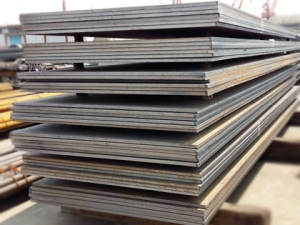
Ordinary medium thick steel plates represent fundamental materials in global construction and manufacturing industries. These plates, typically ranging from 4mm to 60mm in thickness, serve as backbone materials for structural applications worldwide. Understanding the international standards governing their production is crucial for engineers, procurement specialists, and fabricators working on global projects. This comprehensive guide explores the major standardization systems across key industrial regions, providing essential knowledge for proper material selection and specification.
Chinese Standards (GB/T)
China’s standardization system for steel plates operates under the GB/T (Guobiao/Tuijian) framework, ensuring consistent quality for both domestic use and international trade.
GB/T 700-2006 establishes requirements for carbon structural steels, covering general construction applications where high strength isn’t the primary requirement. This standard includes grades Q195, Q215, Q235, and Q275 with varying yield strengths.
GB/T 1591-2018 governs high-strength low-alloy structural steels, featuring grades Q355, Q390, Q420, Q460, Q500, Q550, Q620, and Q690 with enhanced mechanical properties through microalloying elements.
GB/T 3274-2017 specifies technical requirements for hot-rolled plates, sheets, and strips of carbon structural steels and high-strength low-alloy structural steels, including dimensional tolerances, mechanical properties, and technical delivery conditions.
GB/T 711-2017 covers hot-rolled quality carbon structural steel plates, sheets, and strips for specialized applications requiring improved mechanical properties.
GB/T 712-2022 addresses structural steel for ship and ocean engineering, ensuring materials meet the rigorous demands of marine environments with enhanced corrosion resistance and toughness.
GB/T 8162-2018 establishes standards for seamless steel tubes for structural purposes, complementing plate standards for comprehensive structural solutions.
American Standards (ASTM)
The American Society for Testing and Materials (ASTM) standards represent one of the most widely recognized systems globally, particularly in North America and international projects with American specifications.
ASTM A36 is the fundamental standard for carbon structural steel plates in bridges and buildings, valued for its excellent weldability and formability at competitive costs.
ASTM A572 covers high-strength, low-alloy structural steel plates with grades 42, 50, 55, 60, and 65, offering enhanced strength-to-weight ratios through Columbium-Vanadium alloying.
ASTM A283 includes four grades (A, B, C, D) of carbon steel plates of structural quality for general application where higher strength is not required.
ASTM A514 specifies requirements for high-yield-strength, quenched and tempered alloy steel plates, primarily used in demanding applications such as mining equipment and construction machinery.
ASTM A516 governs carbon steel plates for pressure vessels for moderate and lower-temperature service, with grades 55, 60, 65, and 70 offering varying tensile strengths.
ASTM A131 covers structural steel plates for ship construction, with grades A, B, C, D, E, CS, and DS suitable for various marine applications.
British Standards (BS)
The British Standards system, increasingly harmonized with European Norms (EN), provides comprehensive specifications for the UK and Commonwealth markets.
BS EN 10025 establishes technical delivery conditions for structural steel plates and strips, covering non-alloy structural steels through multiple parts with grades S235, S275, S355, S420, and S460.
BS 4360 specifies weldable structural steels, though largely superseded by EN standards, still referenced in existing structures and specifications.
BS 970 governs carbon and alloy steel plates for mechanical and automotive engineering applications requiring specific hardening and tempering characteristics.
BS 1501 specifies steel plates for pressure vessels in industrial applications, with grades 151, 161, 221, 223, and 224 designed for different service conditions.
BS 1449 covers hot-rolled plate and strip specifications for various industrial uses, including carbon, carbon-manganese, and stainless steels.
BS 6323 establishes requirements for seamless and welded steel tubes for structural purposes, complementing plate standards for complete structural solutions.
Japanese Standards (JIS)
The Japanese Industrial Standards (JIS) system represents Asia’s influential standardization framework, with Japanese steel products recognized globally for consistent quality.
JIS G3101 governs general structure hot-rolled steel plates with grades SS330, SS400, SS490, SS540, establishing fundamental requirements for materials used in building construction and bridge work.
JIS G3106 specifies hot-rolled welded structure steel plates with grades SM400, SM490, SM500, SM520, SM570, designed specifically for welded structural applications.
JIS G3136 addresses hot-rolled high strength steel plates with improved formability, featuring grades SPFH340, SPFH400, SPFH440, SPFH490, SPFH540 for automotive and structural applications.
JIS G3115 covers carbon and alloy steel plates for pressure vessel service with grades SGV410, SGV450, SGV480, SGV510, ensuring safety in containment applications.
JIS G4051 specifies carbon steels for machine structural use with grades SxxC (where xx indicates carbon content), providing precise chemical compositions for mechanical components.
JIS G3444 establishes requirements for carbon steel tubes for general structural purposes, completing the structural materials specification framework.
Global Standardization Trends
While each standardization system reflects regional industrial priorities and historical development, several unifying trends emerge:
Harmonization Efforts: Increasing alignment between national standards and international ISO standards facilitates global trade and technical cooperation.
Performance-Based Specifications: Modern standards increasingly emphasize performance requirements rather than prescribing specific manufacturing methods.
Enhanced Safety Requirements: Updated standards incorporate improved safety factors, particularly for seismic and dynamic loading conditions.
Environmental Considerations: Newer editions address sustainability through provisions for recycled content and environmental product declarations.
Digital Compliance: Emerging standards accommodate digital product passports and automated compliance checking.
Selection Considerations
Choosing the appropriate standard requires careful evaluation of:
-
Project Specifications: Client requirements, engineering standards, and regulatory mandates
-
Application Requirements: Structural, pressure vessel, shipbuilding, or general purpose use
-
Mechanical Properties: Yield strength, tensile strength, elongation, impact toughness
-
Fabrication Processes: Welding, forming, machining requirements and compatibility
-
Service Conditions: Temperature extremes, corrosion environment, loading conditions
-
Availability and Cost: Regional material availability and economic considerations
Conclusion
The global landscape of ordinary medium thick steel plate standards reflects both regional traditions and increasing international harmonization. While GB/T, ASTM, BS, and JIS standards each maintain distinct characteristics, they collectively ensure that steel plates meet consistent quality and performance requirements worldwide. As international trade continues to expand, understanding these standardization systems becomes increasingly vital for professionals engaged in material specification, procurement, and fabrication across global markets. By selecting the appropriate standard and verifying compliance through proper certification, project stakeholders can ensure structural integrity, regulatory compliance, and optimal performance throughout the project lifecycle.