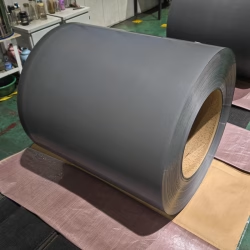
[Featured Snippet – Definition]
What is the Difference Between Galvanized and Galvalume Steel?
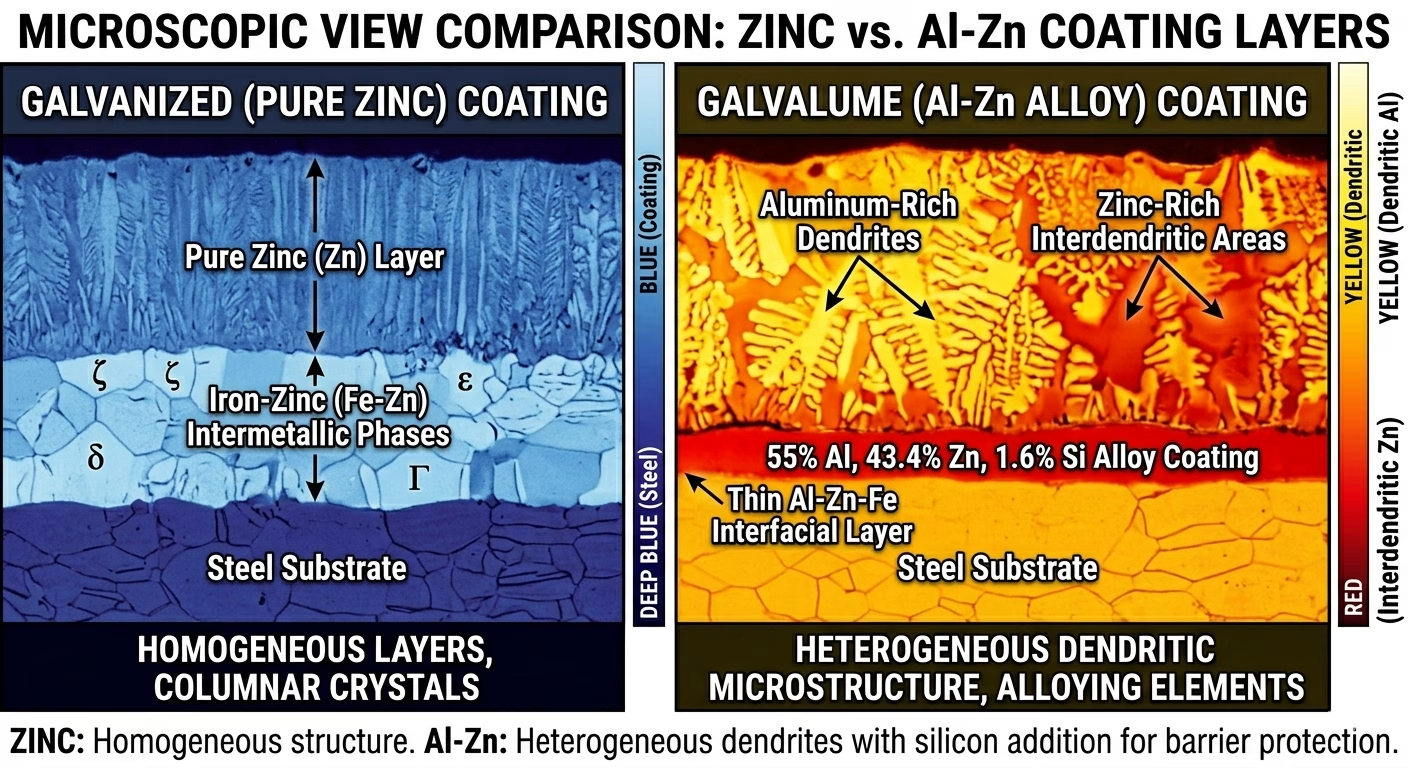
The primary difference between galvanized and galvalume steel lies in the chemical composition of their protective coating. Galvanized steel is coated with 100% pure zinc to provide sacrificial (cathodic) protection. In contrast, Galvalume (also known as Aluzinc) is coated with an alloy of 55% aluminum, 43.4% zinc, and 1.6% silicon. While Galvalume offers superior long-term surface durability and heat reflectivity, Galvanized steel provides better “self-healing” protection at cut edges and in highly alkaline environments like animal confinement or concrete contact.
1. Chemical Composition: The Science of Protection
To understand why these materials behave differently, we must look at the microscopic level of the manufacturing process.
1.1 Galvanized (Pure Zinc)
Galvanized steel uses the traditional hot-dip method to apply a layer of zinc. The zinc acts as a “sacrificial anode.” If the steel is scratched, the zinc corrodes first to protect the underlying iron.
- Standards: ASTM A653 / EN 10346.
- Typical Grade: Z275 (G90) is the industrial benchmark.
1.2 Galvalume (Al-Zn Alloy)
Invented by Bethlehem Steel in 1972, Galvalume combines the barrier protection of aluminum with the sacrificial protection of zinc.
- Composition: 55% Al, 43.4% Zn, 1.6% Si.
- Role of Silicon: Prevents the alloy from becoming too brittle, ensuring it remains flexible for roll-forming into roofing panels.
- Standards: ASTM A792 / EN 10346 (coded as DX51D+AZ).
2. Technical Comparison: Head-to-Head
For engineers and procurement officers, the following HTML table provides a precise data-driven comparison:
3. The “Cut-Edge” Problem: Why Chemistry Matters
One of the most frequent technical questions we receive at Zhongtang Metal concerns edge corrosion.
3.1 Galvanized’s Self-Healing Advantage
Because galvanized steel is 100% zinc, the “zinc creep” effectively covers the exposed carbon steel when a sheet is cut or drilled. This makes it superior for projects involving significant on-site fabrication.
3.2 Galvalume’s Barrier Limitation
In Galvalume, the aluminum creates a hard “barrier” that does not migrate as easily as pure zinc. While the surface remains pristine for decades, the cut edges may show “red rust” faster than galvanized steel if not treated with a touch-up pen or hemmed properly.
4. Performance in Different Environments (ISO 9223)
The choice between galvanized vs galvalume should be dictated by your project’s corrosivity category.
4.1 C1 – C3 (Inland, Urban, Light Industrial)
Recommendation: Galvalume. In these environments, Galvalume lasts up to 3x longer than galvanized steel. The aluminum oxide barrier is nearly impenetrable by standard rainwater and humidity.
4.2 C4 – C5 (Coastal and Marine)
Recommendation: Galvanized (High Coating). Salt spray is a “Galvalume killer.” The salt breaks down the aluminum barrier, leading to rapid pitting. For coastal projects within 5km of the sea, we recommend Z350 or Z450 heavy galvanized coating.
4.3 Agricultural (Animal Confinement)
Recommendation: Galvanized. Animal waste produces high levels of ammonia (alkaline). Aluminum reacts poorly to high pH levels. For poultry houses or pig barns, galvanized steel remains the global standard.
5. Heat Reflectivity and Energy Efficiency
In 2026, energy-efficient building standards make Galvalume a top choice for industrial roofing.
- Solar Absorption: Galvalume reflects roughly 65% to 75% of solar heat, significantly reducing AC costs in summer.
- Thermal Resistance: It can withstand temperatures up to 315°C (600°F) without discoloration, whereas galvanized steel begins to yellow at 200°C.
6. Sizing and Standards (Technical Specs)
When sourcing from a steel supplier in China, you must specify the correct mass equivalent:
- GI Standard Spec: Z275 (G90) = 20 microns per side.
- GL Standard Spec: AZ150 = ~25 microns per side.
- Pro-Tip: Because Galvalume (density ~3.75 g/cm³) is lighter than Zinc (density ~7.14 g/cm³), an AZ150 coating is actually thicker than a Z150 coating despite the lower mass number.
To calculate your exact requirements, use our Galvanized Coating Thickness Chart or our Steel Coil Weight Calculator.
7. Cost Analysis: Initial Price vs. ROI
- Initial Cost: Galvalume is typically 5% to 10% more expensive than galvanized steel due to the aluminum content.
- Life-Cycle ROI: For an inland warehouse, Galvalume provides a better ROI because it eliminates the need for roof replacement at the 20-year mark, often lasting 45+ years.
8. Case Study: Coastal vs. Inland Performance
Zhongtang Metal Data (2019-2025):
- Project A (Inland Warehouse, Vietnam): Used AZ150 Galvalume. After 6 years, surface gloss remains at 85%, zero visible rust.
- Project B (Coastal Port, Indonesia): Used AZ150 Galvalume. Within 3 years, significant pitting occurred near cut edges.
- Solution for Project B: Switched to Z350 Hot-Dip Galvanized Steel. Current inspection (2025) shows stable performance with minimal zinc loss.
9. Frequently Asked Questions (FAQ)
-
Q1: Can I use Galvalume with concrete?
No. Aluminum reacts with the wet alkalis in concrete. Always use Galvanized steel if the metal will be in direct contact with wet concrete or mortar.
-
Q2: Which is better for pre-painted steel (PPGI/PPGL)?
Both are excellent substrates. However, PPGL (Galvalume base) is becoming more popular for roofing because the substrate itself lasts longer if the paint is scratched.
-
Q3: Does Galvalume rust?
It can rust, but usually only at the cut edges or in harsh marine environments. On flat surfaces, it is extremely resistant to red rust.
-
Q4: How do I visually tell the difference?
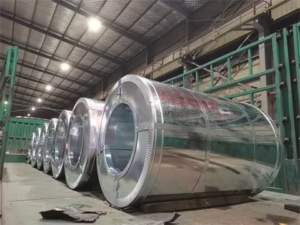
Galvanized steel usually has larger, more varied “spangles.” Galvalume has a very small, uniform, matte silver crystalline spangle.
10. Conclusion: Making the Final Choice
- Choose Galvanized (Z275/G90) if: You are building in a coastal area, a farm, or your project involves heavy welding and on-site cutting.
- Choose Galvalume (AZ150) if: You are building an inland warehouse, residential roof, or need the highest energy efficiency and surface longevity.
Need a customized quote for GI or GL Coils?
- Check Live Prices: Steel Price Per Ton Today
- Get Expert Advice: [Contact Zhongtang Metal Technical Team]
About the Author
Mr. Chen, Senior Sourcing Expert at Zhongtang Metal 18+ years in B2B steel procurement and quality assurance. Expert in ASTM A792 and EN 10346 international standards.