[Featured Snippet – Definition/Outlook]
What is the Galvanized Steel Price Outlook for 2026?
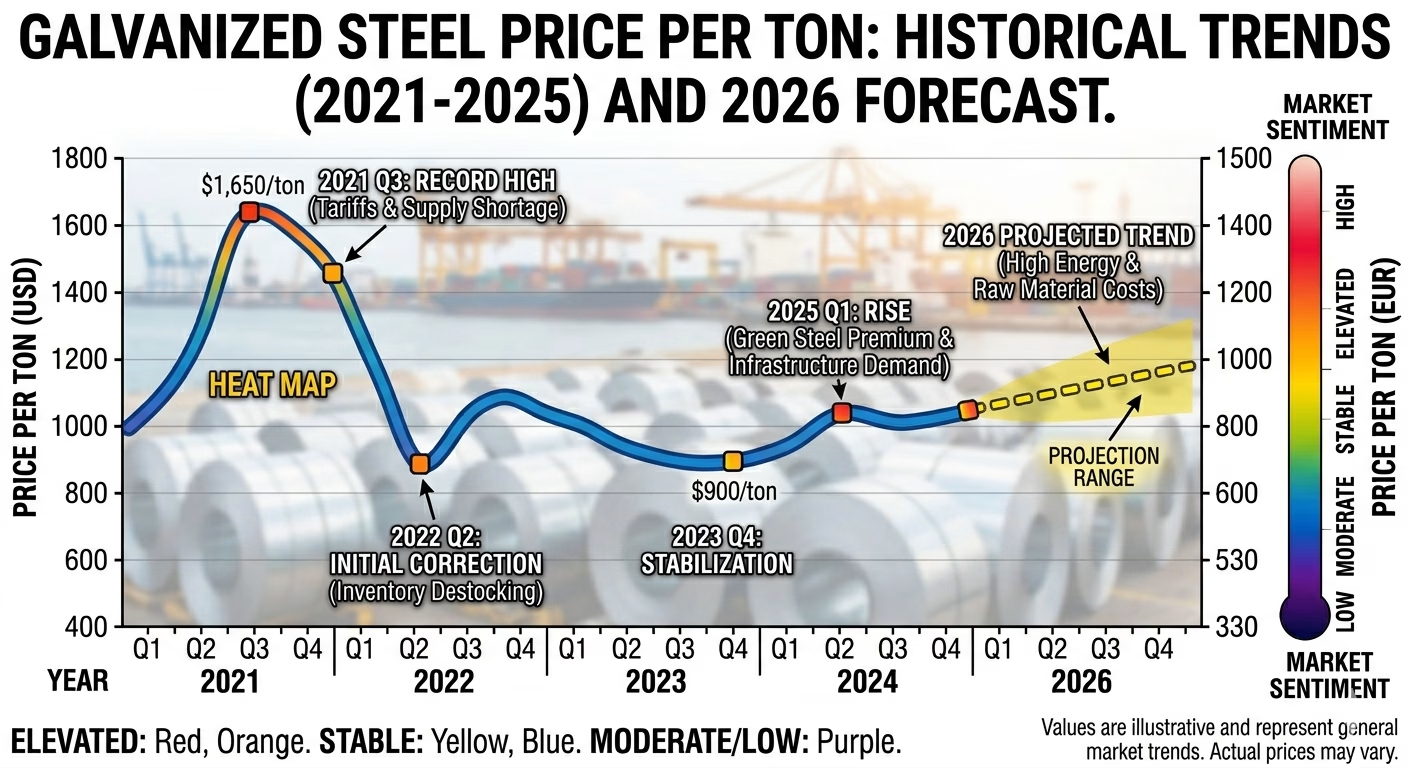
The galvanized steel price in 2026 is projected to remain volatile, influenced by fluctuating zinc LME prices, global energy costs, and the shift toward “Green Steel” production. While base carbon steel prices may stabilize, the premium for high-coating products (like Z275/G90) is expected to increase due to rising ESG compliance costs and zinc market supply constraints. B2B buyers should anticipate a price range of 750to950 per ton (FOB China) depending on specifications and coating weights.
1. Introduction: Why Price Intelligence Matters in 2026
In the global steel trade, timing is everything. For procurement officers and project managers, understanding the galvanized steel manufacturing process and its cost drivers is the difference between a profitable project and a budget overrun.
Note: For real-time weekly FOB China quotes, please refer to our Steel Price Per Ton Today live tool.
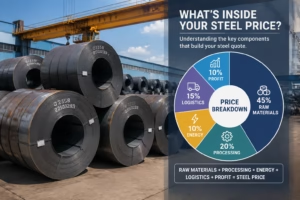
2. The 4 Main Drivers of Galvanized Steel Prices
To predict where prices are going, we must first analyze the four pillars of the cost structure.
2.1 The Zinc Factor (LME Impact)
Unlike standard hot-rolled steel, galvanized steel is uniquely tied to the London Metal Exchange (LME) Zinc prices. Zinc typically accounts for 10% to 25% of the total production cost of a Z275 coil.
- Correlation: Every 100increaseinzincpertoncanaddapproximately15-$25 to the price of a Z275 galvanized coil.
- 2026 Outlook: Zinc supply remains tight due to aging mines in Australia and South America, creating a “floor” for galvanized price premiums.
2.2 Iron Ore and Steel Scrap
The “Base Metal” cost is driven by iron ore and coking coal. In 2026, the shift toward Electric Arc Furnaces (EAF) means that the price of steel scrap is becoming as influential as iron ore.
2.3 Energy and Passivation Costs
The hot-dip galvanization process is energy-intensive. Heating zinc kettles to 450°C requires significant natural gas or electricity. Furthermore, the chemicals used in Chromate-free passivation (required for EU exports) have seen a 15% price increase due to environmental regulations.
2.4 Global Logistics and Container Rates
Shipping costs from China to major ports (Jebel Ali, Ho Chi Minh, Rotterdam) are a major component of the CIF price. For 2026, we forecast a stabilization of freight rates, though geopolitical shifts in the Red Sea remain a “wildcard” for buyers.
3. Z100 vs. Z275: The Price Premium Analysis
A common mistake among new buyers is assuming all galvanized steel costs the same. The zinc coating weight is the primary price differentiator.
4. Quarterly Forecast for 2026
Based on Zhongtang Metal’s 21 years of historical data and current economic indicators, here is our 2026 quarterly outlook:
Q1 2026: Post-Holiday Volatility
Historically, the first quarter sees a price spike following the Chinese New Year as mills restart production and restock iron ore. Expectation: 820−860/ton.
Q2 2026: Peak Demand Season
Construction activity in the Northern Hemisphere peaks. High demand from the solar energy mounting sector often pushes prices to their yearly highs. Expectation: 880−930/ton.
Q3 2026: Summer Slowdown & Correction
Monsoon seasons in Southeast Asia and summer holidays in Europe typically lead to a cooling of demand. This is often the best time for “Strategic Stockpiling.” Expectation: 790−830/ton.
Q4 2026: Year-End Stability
Mills focus on clearing inventory before year-end audits. Unless there is a major energy crisis, prices tend to stabilize or dip slightly. Expectation: 810−850/ton.
5. Regional Market Variations
The galvanized steel price per ton is not uniform across the globe.
- China (FOB Basis): Remains the global price leader due to massive scale and integrated supply chains. Zhongtang’s competitive advantage lies in our direct mill access.
- Southeast Asia: Prices are heavily influenced by anti-dumping duties and regional infrastructure projects (Vietnam, Indonesia).
- Europe & North America: Prices are significantly higher (often +30%) due to energy costs, carbon taxes (CBAM), and protectionist tariffs.
6. How Coating Type Affects Your ROI
When comparing Galvanized vs. Galvalume, price is only part of the equation.
- Initial Cost: Galvalume (AZ150) is typically 5-10% more expensive than Z275.
- Life-Cycle Value: For inland roofing, the higher initial price of Galvalume often leads to a lower total cost of ownership over 30 years.
- Pro-Tip: Use our Steel Coil Weight Calculator to compare the actual weight and cost-per-meter for different specifications.
7. Strategic Purchasing: 4 Steps to Optimize Your Budget
To manage the galvanized steel price risks in 2026, we recommend the following protocol:
-
Step 1: Monitor LME Zinc Weekly
If Zinc drops below $2,500/ton, it is often a signal that heavy-coated products (Z275+) are at their price floor.
-
Step 2: Consolidate Orders
Shipping a full container (approx. 25-28 tons) significantly reduces the “Freight-per-ton” cost compared to LCL shipments.
-
Step 3: Specify Standards Clearly
Ambiguity in specs (e.g., asking for “commercial quality” without defining the Z-code) allows suppliers to quote low but deliver low-quality Z40 coating. Always specify [Z275/G90](https://zhongtangmetal.com/what-does-z275-mean/) for outdoor projects.
-
Step 4: Request “Mill-Direct” Pricing
Eliminating middlemen can save 3-5% on the final invoice. Ensure your [steel supplier in China](https://zhongtangmetal.com/how-to-evaluate-steel-suppliers-china/) has actual export records and quality certifications.
[Case Study: Solar Mounting Manufacturer Optimization] A client in Dubai switched from monthly “Spot” buying to a quarterly contract during the Q3 dip. By monitoring the LME zinc floor, they reduced their average cost-per-ton by 8%, saving $120,000 on a 15,000-ton project.
8. The Impact of “Green Steel” on 2026 Pricing
The introduction of the Carbon Border Adjustment Mechanism (CBAM) by the EU is a game-changer.
- The “Green Premium”: Galvanized steel produced with low-carbon energy sources will carry a 30−50 premium in 2026.
- Zhongtang’s Commitment: We are optimizing our production lines to meet the reporting requirements for international ESG standards, ensuring our clients can import with minimal tariff penalties.
9. Frequently Asked Questions (FAQ)
Q: Why is galvanized steel more expensive than cold-rolled steel? A: Because of the additional hot-dip galvanization process and the cost of the raw zinc coating, which adds between 50and200 per ton depending on thickness.
Q: Is the price per ton different for coils vs. sheets? A: Yes. Sheets usually carry a cutting/processing fee of 10−20 per ton.
Q: Does the “Spangle” size affect the price? A: Generally, no. “Big Spangle,” “Regular Spangle,” and “Zero Spangle” are priced similarly, though Zero Spangle is becoming the standard for pre-painted (PPGI) applications.
Q: How often do galvanized steel prices change? A: In a volatile market, FOB China prices can change daily. However, most reputable suppliers will honor a quote for 3 to 7 days.
Q: What is the best month to buy steel? A: Historically, July and August (low demand) or December (year-end inventory clearing) offer the most competitive pricing.
10. Conclusion: Navigating 2026
The galvanized steel price in 2026 will reward the “Informed Buyer.” By understanding the link between zinc LME, coating weights, and quarterly market cycles, you can move from reactive buying to proactive procurement.
About the Market Analysis Team
Zhongtang Metal Market Intelligence Unit Combining 21 years of trade data with real-time LME tracking. Lead Analyst: Mr. Zhao, Senior Economist (Steel & Commodities).
Related Technical & Pricing Resources
- Check Real-Time Prices: Steel Price Per Ton Today
- Technical Spec Guide: What Does Z275 Mean?
- Manufacturing Guide: The Ultimate Galvanized Steel Hub
- Cost Comparison: Galvanized vs. Galvalume Steel