
In 2025, China’s steel industry stands at a critical crossroads of transformation-driven growth and market volatility. On one hand, policy-led high-tech upgrades are reshaping the sector’s core logic—shifting from “raw material production” to “high-value materials” and from “manufacturers” to “comprehensive service providers”. On the other hand, September’s steel market is navigating narrow fluctuations in black commodities, overseas investment moves, and mixed downstream demand. This article integrates the latest policy trends, market data, and enterprise practices to decode the industry’s opportunities, with trusted links to enhance credibility and a direct gateway to our procurement solutions.
1. Policy & Tech Dual-Drive: Steering Steel Industry Toward “Dual Transformation”
1.1 Hebei Symposium Sets the Tone for High-Quality Development
In late August, Hebei Province hosted a Steel Industry High-Quality Development Forum (policy details available via China Iron and Steel Association), highlighting two core shifts to break industry “involution”:
- Upgrading from “raw material-grade products” to “high-performance material-grade products”;
- Transforming from “traditional manufacturers” to “integrated service providers”.
This aligns with the China Iron and Steel Association’s (CISA) 2025 roadmap, which addresses the sector’s long-standing pain points: structural overcapacity and squeezed profit margins. Zhang Xiaogang, Chairman of the Chinese Society for Metals, emphasized that “steel enterprises must leverage technology for efficiency and explore cutting-edge growth drivers”—turning technological innovation from a “key variable” into the “biggest driver of high-quality development”.
Leading enterprises like HBIS and Baosteel have already made breakthroughs. For instance, they’ve upgraded product structures from “conventional to high-grade, high-grade to specialty, and specialty to precision”, developing ultra-low-temperature high-toughness steel, medical stainless steel, and long-life automotive steel to meet demands from aerospace, new energy vehicles, and other high-end sectors.
1.2 “Steel+” Innovation & “Embedded Services” Open New Tracks
To achieve material-grade breakthroughs, the industry is exploring “Steel+” multi-scenario applications: coating, laminating, and dissimilar metal composites are used to create corrosion-resistant, easy-to-weld “Steel+” materials, which are now widely adopted in emerging fields like electronic information and satellite internet.
Meanwhile, the “embedded service” model is gaining traction. Steel enterprises are breaking industry boundaries to set up steel processing centers near downstream clusters, offering integrated services such as sawing, bending, welding, forming, and distribution—forging “industrial chain communities”.
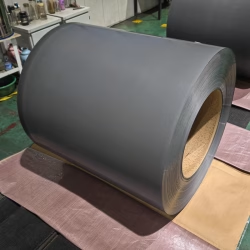
For procurement of high-value-added steel (e.g., color-coated steel coils, customized H-beams), visit Zhongtang Metal’s official website https://zhongtangmetal.com/. With 21 years of global export experience, Zhongtang Metal maintains full-category standard steel inventory, supports custom processing, and ensures quality via SGS/TÜV third-party inspections, adapting to logistics and compliance requirements across 150+ countries.
2. September Steel Market Review: Narrow Fluctuations in Black Commodities & Demand Differentiation
2.1 Night Session Black Commodities Fall: Market Still in “Bottoming Phase”
According to the latest September 2 report from Lange Steel Network, night-session black commodities saw narrow declines: main coking coal fell 0.8%, rebar main contract dropped 0.48% (to 3,107 RMB/ton), hot-rolled coil main contract fell 0.48% (to 3,294 RMB/ton), and iron ore main contract remained flat. Although the decline slowed from the previous day, rebound momentum was weak, with bears maintaining an advantage—markets need to monitor the effectiveness of support at previous lows.
From a capital perspective, rebar and hot-rolled coil main contracts have seen large-scale position increases recently, with capital inflows driving market adjustments. Technically, current market signals are weak, and no clear bottom has been established. Short-term trends may remain “weak and stable”, with enterprises advised to focus on the trading ranges of 3,083–3,155 RMB (rebar 01 contract) and 3,273–3,370 RMB (hot-rolled coil 01 contract).
2.2 Key Market Dynamics: Baosteel’s Overseas Investment & Mixed Downstream Demand
- Accelerated Overseas Layout: Baosteel recently revealed it is negotiating steel project investments with potential partners in Southeast Asia, Central Asia, the Middle East, and North Africa. This move not only helps avoid trade barriers but also brings production closer to local automotive and infrastructure demand, setting a benchmark for the industry’s “global transformation”.
- Downstream Demand: Pressure & Bright Spots Coexist: August’s land market was sluggish—CRIC data showed that 30 leading real estate enterprises’ land acquisition volume halved month-on-month (a 12-month low), directly impacting construction steel demand. However, the heavy truck market bucked the trend: August sales reached 84,000 units (up 35% YoY), marking a “five-month consecutive increase” and supporting demand for commercial vehicle steel.
- Cost-Side Adjustments: Steel enterprises in multiple regions launched the first round of coking coal price cuts (50–55 RMB/ton). Combined with Shandong Iron and Steel’s efforts to reduce iron ore costs via “collaborative procurement + cornerstone plan”, this may ease corporate profit pressure to some extent.
Additionally, the Eurozone’s August manufacturing PMI final value rose to 50.7 (a 3-year high)—expanding for the first time since mid-2022—signaling a global manufacturing recovery that could boost China’s steel exports long-term. Enterprises can use Zhongtang Metal’s “door-to-door” export services to connect with overseas orders.
3. Winning Strategies for Steel Enterprises: Building Competitiveness via “Service + Green Development”
3.1 From “Selling Products” to “Providing Services”: Deepening Customer Value
Yu Yong, President of the World Steel Development Research Institute, stressed that “R&D leadership must start with customers”. Modern steel enterprises need to move beyond “single production” and offer full-lifecycle services (material selection, product design, logistics, recycling) for downstream clients in automotive, home appliances, and engineering machinery. For example, Jiyuan Iron and Steel transformed from a “steel producer” to a “material service provider” by aligning upstream and downstream chains to channel customer needs into R&D.
Zhongtang Metal also excels in service-oriented manufacturing: its website https://zhongtangmetal.com/ offers “custom solutions + full logistics tracking”, supports “on-demand processing” of galvanized pipes, steel-plastic composite pipes, and welded pipes, and provides cost breakdowns and customs clearance support to simplify procurement.
3.2 Green & Intelligent Development: An Irreversible Trend
Policy-wise, Hebei’s symposium emphasized “promoting green development via energy conservation and carbon reduction”, supporting steel enterprises in using clean energy and expanding scrap steel utilization. Technologically, the integration of 5G, AI, and steel large models is accelerating—applications in product design, quality inspection, and warehousing have helped enterprises improve production efficiency by over 40%.
Globally, hydrogen metallurgy and carbon capture and storage (CCS) are key to the industry’s “decarbonization”. The World Steel Association’s latest report notes that these technologies will underpin the global steel industry’s 2030 carbon reduction goals. Chinese enterprises are already leading in this field, positioning themselves as global pioneers in “green steel”.
Conclusion: 2025 Steel Industry—Finding Certainty in Transformation
2025 is a pivotal year for China’s steel industry: a critical period for high-tech transformation and a period of adaptation to market adjustments. Enterprises must focus on three core pillars—policy guidance (high-end, intelligent, green), market demand (high-value materials, service-oriented manufacturing), and global layout—to break free from involution.
For more industry updates (e.g., specialty steel specs, overseas procurement guides), refer to authoritative sources like the China Iron and Steel Association and Lange Steel Network. To purchase galvanized steel, carbon steel plates, or color-coated steel coils, or to consult export custom solutions, visit Zhongtang Metal —we offer one-stop support backed by 21 years of industry experience.