What is Galvanized Steel? The Ultimate Industrial Guide (2026)
[Featured Snippet – Definition]
What Does Galvanized Steel Mean?
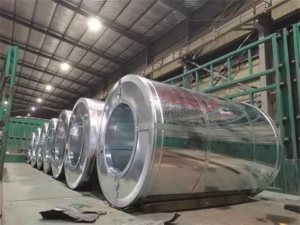
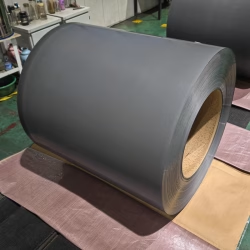
Galvanized steel is a carbon steel product coated with a protective layer of metallic zinc to prevent atmospheric corrosion and rust. Through a metallurgical reaction—most commonly hot-dip galvanization—the zinc forms a permanent bond with the steel substrate. This creates a durable, self-healing shield that provides both barrier protection and cathodic (sacrificial) protection, making it the industry standard for construction, solar energy, and infrastructure projects.
1. The Galvanization Process: How It’s Made
Understanding the manufacturing process is essential for evaluating the quality of the galvanized steel coils you source.
1.1 Pre-treatment: The Foundation of Adhesion
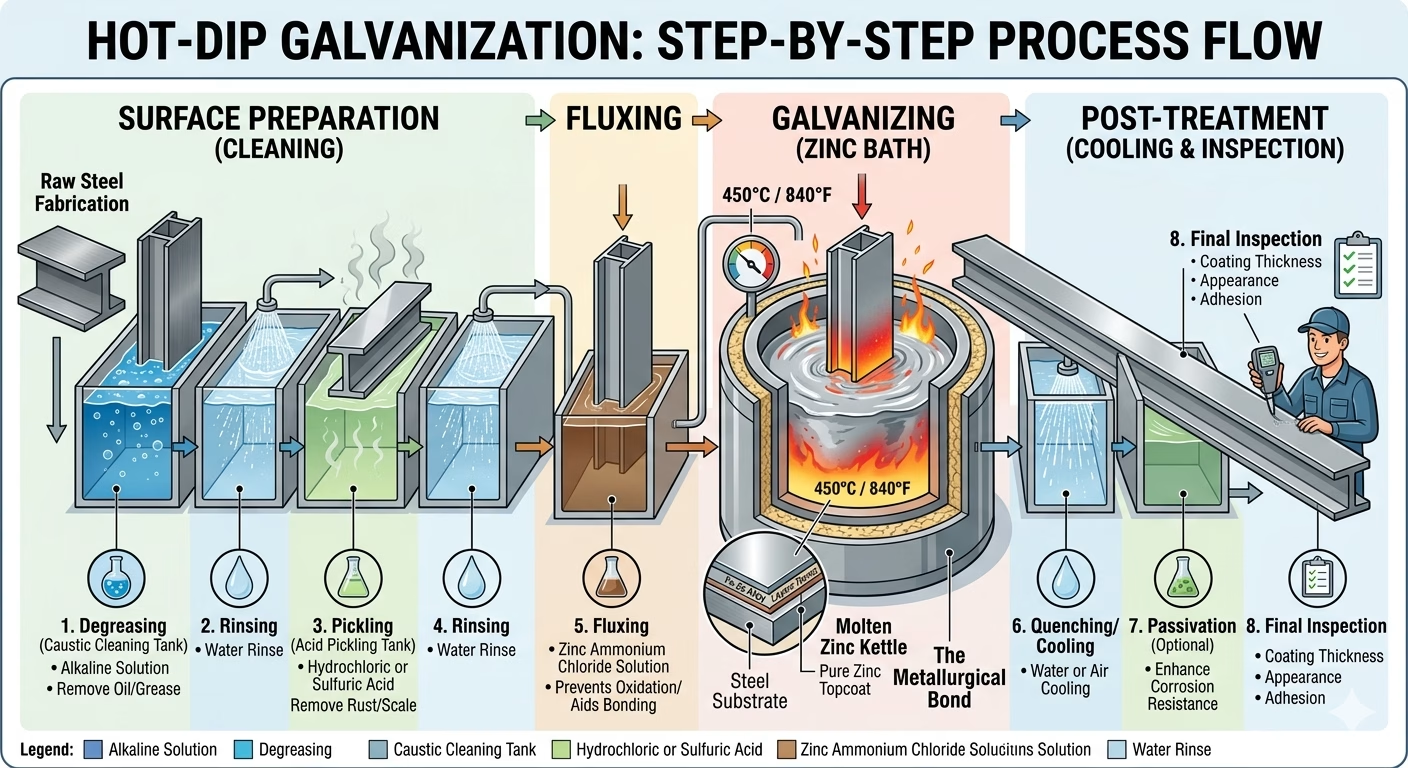
Before the steel enters the zinc bath, it must undergo a rigorous four-step cleaning process:
- Degreasing: Removal of organic contaminants like oil and grease using an alkaline solution.
- Pickling: Dilute hydrochloric or sulfuric acid removes mill scale and iron oxides.
- Rinsing: Cleanses the acid off the surface.
- Fluxing: The steel is dipped in a zinc ammonium chloride solution to prevent oxidation before the final dip and to enhance the metallurgical bond.
1.2 Hot-Dip Galvanization (HDG)
The “Heart” of the process. The cleaned steel is submerged in a kettle of molten zinc at approximately 450°C (842°F). A series of zinc-iron alloy layers form, topped by a layer of pure zinc.
- Metallurgical Bond: Unlike paint, which is a surface coating, galvanization creates a bond that is part of the steel itself.
- Standard Compliance: Most industrial products follow ASTM A123 (for structural shapes) or ASTM A653 (for sheet products).
1.3 Electro-Galvanization
Also known as zinc plating, this process uses an electric current in an electrolyte solution to transfer zinc ions onto the steel. While it offers a smoother finish, the coating is significantly thinner than HDG, making it more suitable for indoor appliances or automotive body parts rather than heavy outdoor construction.
1.4 Post-treatment and Passivation
After cooling, the steel often undergoes Passivation (usually via a chromate solution) to prevent “white rust” during storage and transport. This is a critical step for maintaining the aesthetic and functional integrity of the zinc layer.
2. Zinc Coating Designations and Standards
Choosing the correct coating thickness standards is the most important decision in the procurement process.
2.1 Technical Comparison: EN vs. ASTM Standards
To optimize for Featured Snippets, we use the following HTML data structure:
| EN 10346 Designation | ASTM A653 Designation | Total Coating Mass (g/m²) | Equivalent Thickness (μm per side) | Service Environment |
|---|---|---|---|---|
| Z100 | G30 | 100 | ~7 μm | Indoor / Dry Storage |
| Z140 | G40 | 140 | ~10 μm | Light Industrial / Arid |
| Z275 | G90 | 275 | ~20 μm | Outdoor / Standard (Recommended) |
| Z350 | G115 | 350 | ~25 μm | Marine / Heavy Industrial |
| Z450 | G150 | 450 | ~32 μm | Extreme Corrosive / Chemical |
2.2 How to Choose: The C1-C5 Corrosivity Category
According to ISO 9223, environments are classified by their corrosivity. A Z275 (G90) coating might last 50 years in a C2 (Low) environment but only 10 years in a C5 (Very High) marine environment.
- Pro-Tip: Before ordering, calculate the total weight of your galvanized coil order to factor in logistics costs based on these thickness variations.
3. Top 5 Benefits of Using Galvanized Steel
Why is it the preferred material for global infrastructure?
3.1 Unmatched Cost-Efficiency
According to the International Zinc Association, the life-cycle cost of galvanized steel is significantly lower than painted steel. While initial costs are comparable, the “zero maintenance” nature of zinc means no repainting costs for decades.
3.2 Sacrificial (Cathodic) Protection
This is a unique chemical advantage. If the steel surface is scratched, the surrounding zinc will sacrifice itself through an electrochemical reaction to protect the exposed iron. This prevents the “creep” of rust that often destroys painted surfaces.
3.3 Complete Coverage
The dipping process ensures that even the most complex geometries—inside pipes, sharp corners, and recessed areas—receive the same level of protection as the flat surfaces.
3.4 50+ Year Lifespan
In rural and most suburban environments, Z275 galvanized steel has a proven lifespan of over 50 years. This longevity is why it is the backbone of solar energy mounting systems.
3.5 Ready to Use
Unlike on-site painting, galvanized steel arrives ready for assembly. No time is lost waiting for coatings to cure or dealing with weather-related painting delays.
4. Industrial Applications and Case Studies
Galvanized steel’s versatility spans across diverse sectors.
4.1 Solar Energy Infrastructure
The solar industry is currently the largest consumer of high-zinc coating products.
- Technical Requirement: Must withstand 25+ years of outdoor exposure with zero maintenance.
- Typical Spec: Z275 to Z450 coils for mounting racks and ground piles.
- Case Note: Zhongtang Metal recently supplied 5,000 tons of Z275 coils for a 500MW solar farm in the Middle East, where high UV and sand abrasion are constant factors.
4.2 Construction and HVAC
From roofing and siding to purlins and ductwork, galvanized steel provides the structural integrity and humidity resistance needed for modern buildings.
4.3 Telecommunications and Transmission
High-voltage towers and 5G equipment housing rely on hot-dip galvanized structural shapes to prevent failure in remote, inaccessible locations.
5. Galvanized vs. Other Steel Types: A Decision Guide
Choosing the wrong material can lead to premature failure or wasted budget.
5.1 Galvanized vs. Stainless Steel
While stainless steel (304/316) offers superior corrosion resistance, it can be 4x to 5x more expensive than galvanized steel. For most large-scale structural projects, galvanized steel provides the best “protection-per-dollar” ratio.
5.2 Galvanized vs. Galvalume
Galvalume (Aluminum-Zinc alloy) offers better heat reflectivity and is excellent for roofing in hot climates. However, in highly alkaline environments (like animal barns), galvanized steel performs better due to its higher zinc content.
6. Common Quality Issues and How to Avoid Them
As an experienced steel supplier in China, we focus on preventing these three major defects:
6.1 White Rust (Wet Storage Stain)
White rust is a white, powdery deposit that forms when newly galvanized steel is exposed to moisture in an environment with poor air circulation.
- Prevention: Proper passivation and keeping coils dry during transit.
6.2 Black Spots
These occur when there are impurities in the zinc bath or if the pre-treatment (pickling) was incomplete.
- Prevention: Regular filtration of the zinc kettle and strict adherence to pickling times.
6.3 Coating Non-uniformity
Often caused by improper “wiping” of the steel as it leaves the zinc bath.
- Featured Snippet – Inspection Checklist:
- Verify the Mill Test Certificate (MTC) for chemical composition.
- Use a magnetic thickness gauge to check at least 5 points per square meter.
- Perform the “Hammer Test” to ensure coating adhesion.
7. Pricing and Market Trends for 2026
The global steel market is shifting towards “Green Steel” initiatives.
- Live Pricing: For real-time FOB China prices updated weekly, visit our Steel Price Per Ton Today tool.
- Market Analysis: For an in-depth analysis of 2026 price trends, LME zinc impact, and purchasing timing strategies, read our Galvanized Steel Price Guide 2026.
8. Frequently Asked Questions (FAQ)
Q: How long does Z275 galvanized steel last? A: In C3 (Medium Corrosivity) environments, Z275 (G90) steel typically lasts 25-50 years before the first maintenance is required.
Q: Is galvanized steel rust-proof? A: It is highly rust-resistant. The zinc layer delays rust for decades, but it will eventually oxidize. However, it is the most cost-effective way to prevent rust in industrial applications.
Q: Can you weld galvanized steel? A: Yes, but it requires removing the zinc coating near the weld area first to avoid zinc fumes and brittle welds.
Q: Does galvanized steel contain lead? A: Modern high-quality galvanization (like Zhongtang’s) uses high-purity zinc (99.99%) with virtually zero lead content, complying with RoHS standards.
Q: What is the difference between Z275 and G90? A: They are identical in coating weight. Z275 is the European (Metric) designation (275 g/m²), while G90 is the American (Imperial) designation (0.90 oz/ft²).
9. Why Source from Zhongtang Metal?
With 21 years of manufacturing expertise, Zhongtang Metal is more than just a supplier; we are your technical partner.
- Global Reach: Exporting to 150+ countries.
- Certified Quality: Fully compliant with ISO 9001, ASTM, and EN standards.
- Transparency: See our client success stories and project gallery here.
[Reviewed by: Zhang Wei, Chief Technical Officer] B.Eng in Materials Science, 22 Years in Steel Production.
10. Related Deep Dives
Explore specific aspects of galvanized steel:
- What Does Z275 Mean in Galvanized Steel?
- SGCC vs DX51D: Galvanized Steel Grade Comparison
- Galvanized Coating Thickness Chart & Converter
- How to Choose Galvanized Steel for Roofing Projects